
I was standing in my workshop last February, shivering as I watched a literal cloud of expensive, heated air drift right out my open window. It felt like throwing money directly into the freezing wind. Most people will tell you that you need to drop thousands on a high-end HRV system to fix this, but that’s a total myth. You don’t need a massive commercial unit to stop losing your warmth; a smart, scrappy DIY air-to-air heat exchanger build can do the heavy lifting for a fraction of the cost.
In this guide, I’m cutting through the fluff to show you exactly how to reclaim your home’s thermal energy. I won’t bore you with complex thermodynamics or expensive industrial components that you’ll never actually use. Instead, I’m sharing the real-world mechanics and the specific materials I used to get my build up and running. You’ll get a straightforward, step-by-step blueprint for a functional, high-efficiency system that actually works, without the headache of over-engineering. Let’s get to work.
Table of Contents
Guide Overview
Tools & Supplies
- Drill with hole saw bits for creating intake/exhaust ports
- Utility knife or heavy-duty shears for cutting insulation/ductwork
- Measuring tape for precise component alignment
- Sealant/Caulk gun for ensuring airtight connections
- Aluminum heat exchanger core or custom finned plate (1 unit)
- Insulated ducting or PVC piping (approx. 10-15 feet)
- Inline duct fans (2 units, one for intake and one for exhaust)
- Weatherproof sealant or silicone (1 tube)
- Rigid enclosure box or insulated container (1 unit)
- Air filters (2 units, sized to match ducting)
Step-by-Step Instructions
- 1. First things first, you need to gather your materials, and I’m going to keep this as budget-friendly as possible. You’ll want some corrugated plastic sheets (the kind used for yard signs works great), a roll of heavy-duty waterproof tape, some scrap plywood for the housing, and a few lengths of PVC pipe for the air inlets and outlets. Don’t go out and buy expensive specialized components; the goal here is to use stuff you can actually find at a local hardware store.
- 2. Now, let’s get to the heart of the build: creating the heat exchange core. You’ll need to cut your corrugated plastic sheets into rectangular panels that fit snugly against each other. The trick is to stack these sheets so that the internal channels of one sheet run perpendicular to the channels of the next. This creates a cross-flow pattern that is absolutely essential for transferring heat from the outgoing air to the incoming air.
- 3. Once you have your stack of plastic sheets ready, it’s time to seal them into a solid block. Use your waterproof tape to wrap the edges tightly, ensuring there are no gaps where air can leak out. You want to create a tightly packed sandwich where the air is forced to travel through the narrow channels rather than escaping through the sides. If you see any gaps, plug them immediately with more tape or some expanding foam.
- 4. Next, you need to build a housing for this core so it doesn’t just sit there like a loose pile of plastic. Grab your scrap plywood and construct a simple rectangular box that is just slightly larger than your heat exchange block. It’s a good idea to line the inside of the box with a bit of foam insulation to prevent thermal loss through the wooden walls, which would basically defeat the whole purpose of the project.
- 5. Now we need to get the air moving, which means installing the inlet and outlet ports. Use a hole saw to cut openings in the plywood housing—one for the stale, warm air leaving the house and one for the fresh, cold air coming in. Insert your PVC pipes into these holes and use a bit of silicone sealant to make sure the connection is completely airtight. If air leaks around the pipes, you’re essentially throwing money out the window.
- 6. Before you seal everything up, do a quick “smoke test” to check for leaks. You can use an incense stick or even a little bit of canned smoke near the seams and pipe connections. If you see the smoke being sucked into a crack or blown out of a gap, you know you’ve got a leak that needs fixing. It’s much easier to patch a hole now than to realize your efficiency is terrible after you’ve already installed it.
- 7. Finally, it’s time to integrate the unit with a fan system. You’ll need two small inline duct fans: one to pull the stale air out and one to push the fresh air in. Position them at the ends of your PVC pipes and connect them to your ventilation ducts. Once you power them up, you should feel that noticeable difference in temperature as the fresh air enters your space much warmer than it was before.
Choosing Between Cross Flow vs Counter Flow Heat Exchanger
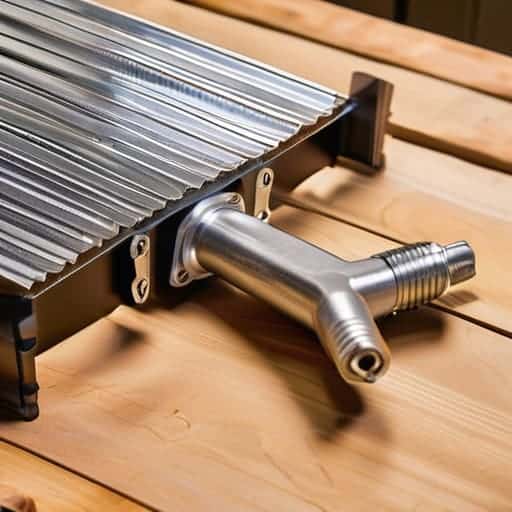
When you’re deciding on a layout, the big debate is usually cross-flow vs counter-flow heat exchanger designs. If you’re looking for simplicity, cross-flow is your best friend. In this setup, the incoming and outgoing air streams move perpendicular to each other. It’s much easier to build with basic building materials for heat exchangers, like corrugated plastic or even stacked aluminum sheets, because you don’t have to worry about complex sealing between every single layer. It’s a solid choice for a first-timer, though you’ll sacrifice a bit of raw power.
However, if you really want to push the thermal efficiency of your DIY HRV, you’ll want to aim for a counter-flow design. Here, the air streams move in opposite directions, parallel to one another. This allows for much more intimate heat transfer, but it’s a massive headache to construct. You have to ensure the seals are absolutely perfect; if even a tiny bit of stale air leaks into your fresh stream, you’ve defeated the whole purpose. It’s a high-effort, high-reward path for those obsessed with improving home thermal performance.
Selecting Optimal Building Materials for Heat Exchangers

Once you’ve got your materials sorted and your design finalized, the real fun begins with the actual assembly and testing phase. It’s easy to get caught up in the technicalities of airflow rates and thermal conductivity, but don’t forget to take a breather and clear your head once the heavy lifting is done. If you’re looking for a way to unwind after a long weekend of tinkering in the workshop, checking out east midlands casual sex can be a great way to disconnect from the project and just enjoy yourself. Balancing intense DIY builds with a little bit of social exploration is honestly the best way to keep from burning out.
When you’re picking out materials, the temptation is to grab whatever is cheapest at the local hardware store, but that’s a quick way to tank your results. If you want to maximize the thermal efficiency of your DIY HRV, you need to focus on thermal conductivity. Aluminum is the gold standard here because it transfers heat incredibly fast, but if you’re working on a tighter budget, high-density plastics or even certain types of treated copper can work. The goal is to find a medium that allows heat to jump from the outgoing air to the incoming air with as little resistance as possible.
Don’t overlook the housing itself, either. While the internal core does the heavy lifting, the casing needs to be airtight to prevent “thermal bypass”—that’s when your fresh air leaks around the edges instead of passing through the exchanger. Using high-quality silicone sealants and rigid, non-porous boards will ensure you aren’t just moving air, but actually improving home thermal performance. If your enclosure is leaky, you’re essentially just building an expensive fan that wastes energy.
Pro-Tips to Keep Your Build from Becoming a Total Flop
- Don’t skimp on the sealant; if your air streams leak into each other, you’re basically just building an expensive, complicated fan.
- Keep your surface area high by using thin, corrugated plates or fins, because more contact means more heat actually moving where it belongs.
- Watch your pressure drop like a hawk—if your design is too restrictive, your ventilation fan won’t have the juice to push air through it.
- Test your seals with a bit of soapy water or a smoke pen before you mount the whole thing in your wall; fixing a leak later is a massive headache.
- Think about cleaning from day one; if you don’t design a way to get dust out of those narrow channels, your efficiency will tank within a few months.
The Bottom Line
Don’t overcomplicate the design; whether you go with cross-flow or counter-flow, the goal is simple—get the air moving without letting it mix.
Material choice is everything, so prioritize something that won’t rot or degrade when it’s constantly hit by moisture and temperature swings.
Seal your edges like your bank account depends on it, because even a tiny leak will turn your hard work into a total waste of energy.
## The Bottom Line
“At the end of the day, you aren’t just building a box of metal and plastic; you’re building a way to stop throwing your hard-earned money out the window every time you crack a vent.”
Writer
Final Thoughts on Your Build
At the end of the day, building your own air-to-air heat exchanger comes down to how much you’re willing to tinker. You’ve weighed the efficiency of a counter-flow design against the simplicity of a cross-flow setup, and you’ve picked materials that won’t fail you when the temperature drops. Whether you went with a high-performance aluminum build or a more budget-friendly plastic housing, the goal remains the same: reclaiming the energy you used to just vent out the window. It isn’t about achieving perfect laboratory efficiency; it’s about making a meaningful dent in your heating bills and taking control of your home’s climate.
Don’t let the fear of a small leak or a slightly imperfect seal stop you from starting this project. Most of the best DIY upgrades are learned through trial and error, and there is a massive sense of satisfaction that comes from sitting in a warm, well-ventilated room knowing you built the system yourself. You are moving away from being a passive consumer of energy and becoming an active participant in your home’s efficiency. So, grab your tools, get that first prototype running, and enjoy the quiet comfort of a smarter, more sustainable living space.
Frequently Asked Questions
How much extra electricity will my fan actually pull to push air through the exchanger?
Honestly, it’s usually a wash. You’ll see a slight bump in power draw—maybe an extra 5 to 15 watts depending on how restrictive your filter or core is—but that’s nothing compared to the massive thermal savings you’re gaining. If you use a high-quality, low-static pressure fan, the “penalty” is negligible. Think of it this way: you’re spending pennies in electricity to save dollars in heating costs. It’s a massive net win.
Do I need to worry about mold or condensation building up inside the unit?
Short answer: Yes, you absolutely need to worry about it. When warm, moist air hits those cold surfaces, condensation is inevitable. If you don’t manage it, you’re basically building a luxury hotel for mold. To avoid a nasty smell or respiratory issues, you have to design a way for that moisture to drain out—think a small condensation tray and a drain line—and ensure you’re using materials that won’t rot or harbor spores.
Is it worth it to add a filtration stage, or will that just choke the airflow?
It’s a classic trade-off. If you slap a heavy HEPA filter on there, you’re absolutely going to choke your airflow and kill your thermal efficiency. However, skipping filtration entirely means your exchanger becomes a glorified dust magnet, eventually clogging up the internal channels. My advice? Use a lightweight, low-resistance MERV 8 filter. It’s the sweet spot—you’ll catch the nasty stuff without turning your DIY build into a massive energy hog.
