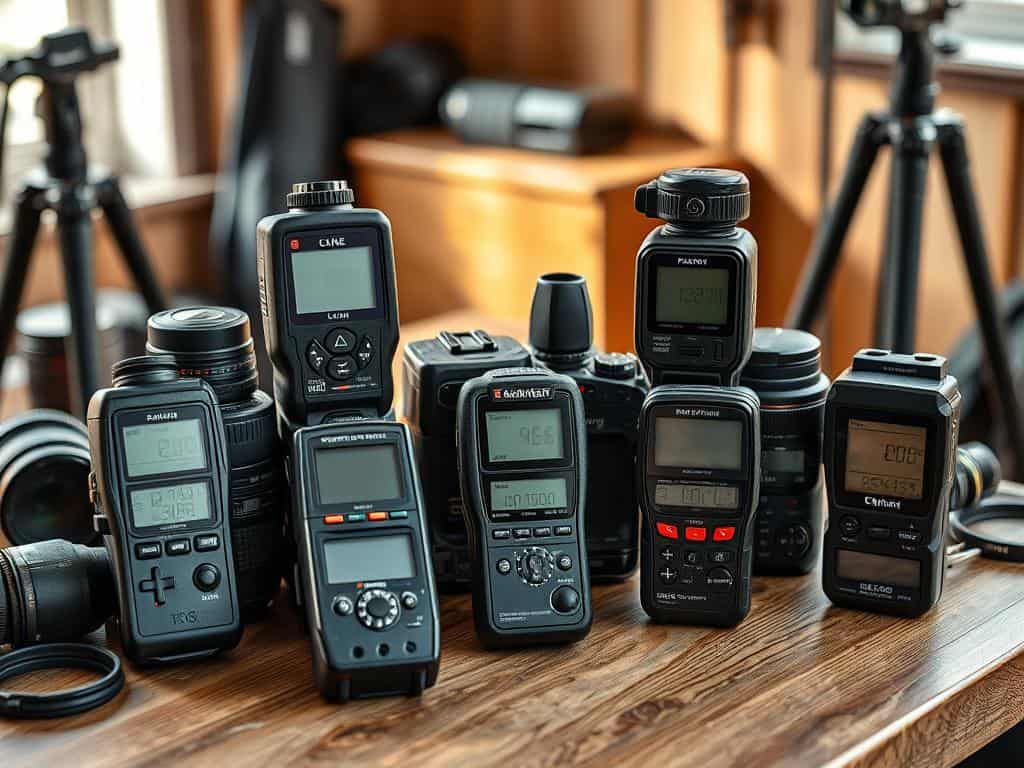

Did you know that even experienced photographers often struggle with perfect exposure? Studies show that about 70% of photos taken in natural light are not exposed right. Light meters are key to getting the right exposure, whether you use handheld devices or apps on your phone.
In this article, we’ll look at the top light meters out there. We’ll cover everything from traditional handheld meters to smartphone apps. I want to show you how these tools can make your photos better. By the end, you’ll know more about the gear you need and have insights from my light meter reviews.
Key Takeaways
- Hand-held light meters provide versatility in measuring both ambient and flash light.
- Leading brands like Gossen and Sekonic offer top-tier models that have stood the test of time.
- Understanding meter functionalities, such as incident and reflected light measuring, is essential for optimal results.
- Smartphone apps are burgeoning alternatives for exposure measurement but come with limitations.
- The best light meters cater to a range of prices, from budget-friendly options to professional gear.
Understanding Light Meters and Why They Matter
Light meters are key in photography, helping you get correct exposure. Bad exposure can ruin your photos. So, learning to use light meters well is vital for any photographer. It lets you capture images that show your true vision.
Importance of Correct Exposure in Photography
Correct exposure is very important in photography. It makes sure your subjects look right, whether indoors or outdoors. Digital cameras sometimes get it wrong, but using light meters right can fix this.
Types of Light Meters: Handheld vs. Attachables
There are two main types of light meters: handheld light meters and attachable light meters. Handheld meters, like the Minolta Auto Meter IV and Gossen Lunasix F, are great for tricky lighting. They measure light well, helping you get the best shots. Attachables are easy to use with cameras but might not be as precise.
How Light Meters Help Achieve Perfect Exposure
Using light meters right is essential for perfect exposure. They give you exact light readings, helping you set your camera right. Incident readings are for models, and reflective readings are for backgrounds. A good light meter makes your photos better, saving you from a lot of editing.
Best Light Meters Reviewed
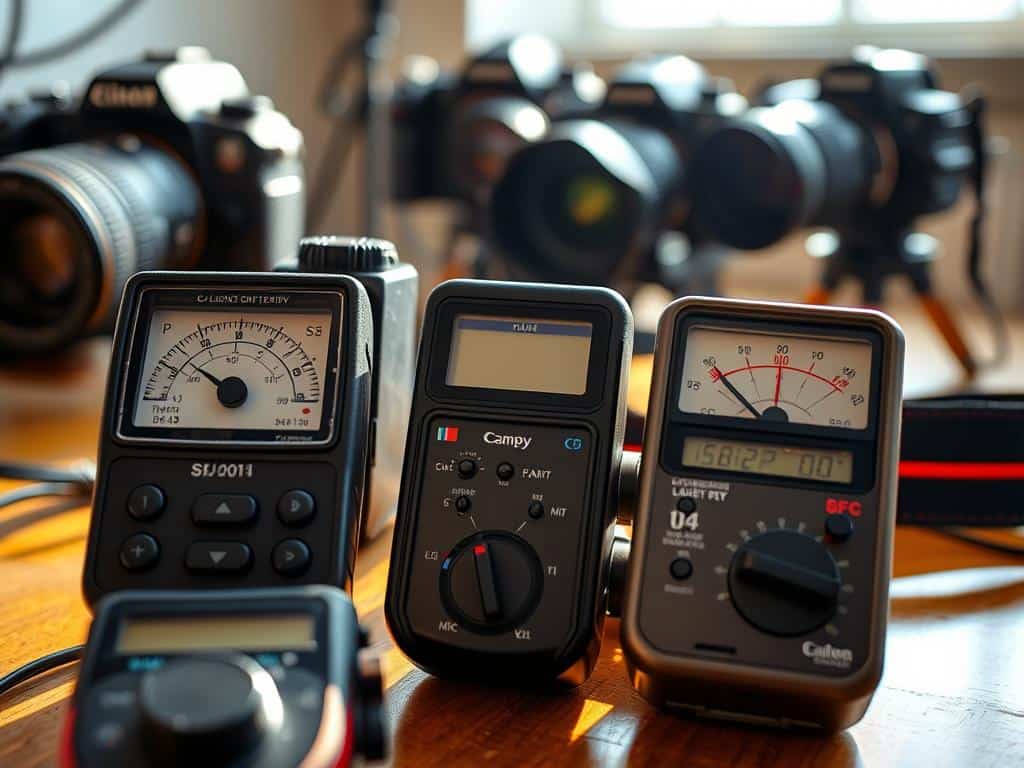
In this section, I’ll share insights on the best light meters reviewed. We’ll look at handheld light meters and smartphone light meter apps. Each tool has unique features for different photography needs.
Top Handheld Light Meters on the Market
Handheld light meters are essential for many photographers. Brands like Minolta and Sekonic are known for their reliability. A Minolta light meter usually costs around $150, showing their quality and precision.
The Sekonic L-398A and L-758D are celebrated for their flash metering and incident light capturing. Having two Minolta light meters is beneficial, as they can get lost during shoots.
Innovative Smartphone Apps as Light Meters
Smartphone light meter apps like myLightMeter Pro are great alternatives. Priced at $3.99, it’s been my go-to app for over a year. It lets users measure light effectively and supports setting shutter speed, aperture, and ISO.
The exposure compensation slider helps adjust for overexposure and underexposure. Five customizable lens presets are available for different camera formats. Reflexive and spot metering features make it versatile in various lighting conditions.
Feature Comparison: Brands and Models
When comparing handheld light meters and smartphone light meter apps, we see different advantages. The Reveni Light Meter has a wide shutter speed range and aperture settings. It’s great for many shooting scenarios.
The Hedeco Lime One is the most expensive shoe mount light meter but is used faster than others. The Lime Two has better build quality with CNC’d aluminum construction. The V-201x is budget-friendly but has slightly inaccurate readings.
Each meter has its pros and cons, showing the importance of choosing the right tool for your photography needs.
Conclusion
Light meters play a huge role in getting perfect exposure in photography. Tools like the TTArtisan Light Meter, priced around $62, offer valuable insights. They help improve the quality of photos by setting accurate exposure.
Choosing the right light meter is key. It ensures your photos look great in any lighting. This is true whether you’re using a handheld model or a smartphone app.
Many photographers like simple, reliable analog light meters. For example, the Voigtlander VC meter II, updated in 2004, is a favorite among pros. This shows the importance of knowing how exposure works, no matter the meter type.
I suggest that all photographers check out light meters. With the right tools and knowledge, getting perfect exposure is fun and easy. This will boost your skills and photo quality.
