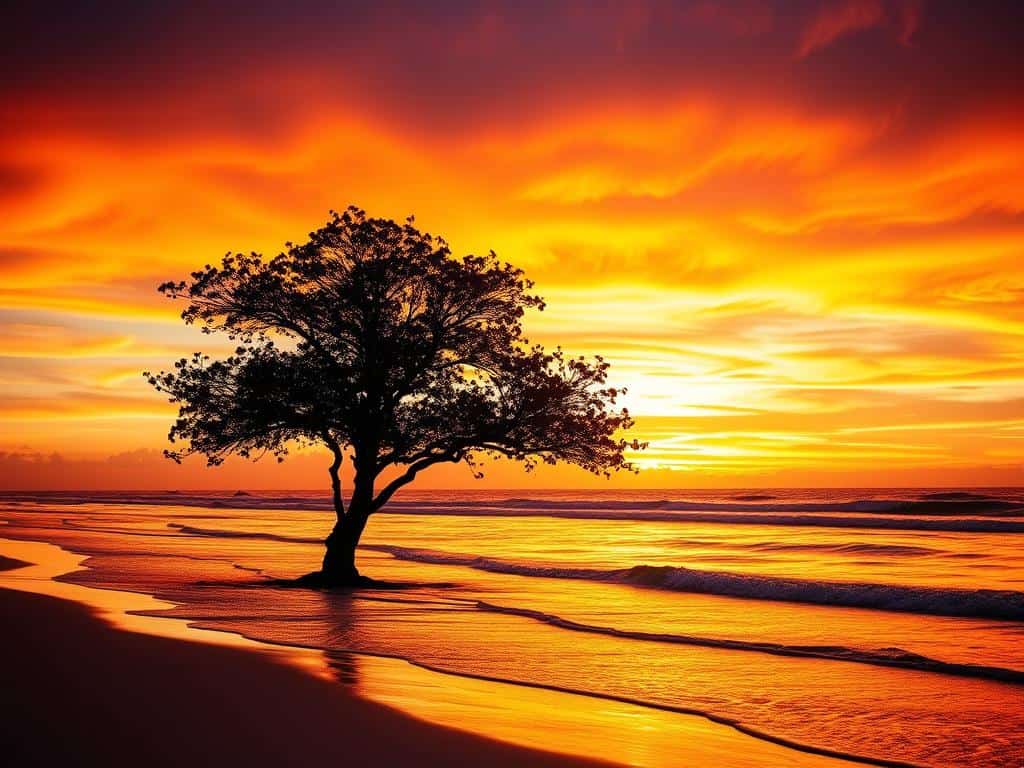

Did you know you can take amazing silhouette photos with just a basic camera and lens? Yes, even an entry-level camera and a simple kit lens can help you create stunning images. By learning a few key techniques, you can turn everyday scenes into beautiful stories. This guide will help you, whether you’re new to photography or have been doing it for years.
Capturing silhouettes is all about using contrast between your dark subject and a bright background. The best times for this are at sunrise or sunset. These times offer the perfect contrast, making your photos stand out. Using spot metering helps you get the right exposure, keeping your subject’s outline sharp.
Also, taking your shot from below, with the horizon at the bottom, makes your subject’s silhouette pop. This technique adds depth and focus to your photo. Remember, clean backgrounds and focusing on shapes help avoid the “black blob” effect.
This guide will cover the basics, like what gear you need and how to set it up. We’ll also explore creative ways to compose your shots. Plus, I’ll show you how to use Lightroom or Photoshop to make your photos even more amazing.
Key Takeaways
- No special equipment is needed; entry-level cameras and kit lenses are sufficient.
- Optimal times for outdoor silhouette shoots are at sunrise or sunset for the best lighting conditions.
- Utilize spot metering to achieve precise exposure on the light source.
- Compose shots from lower angles and isolate subjects to avoid a “black blob” effect.
- Post-processing in Lightroom or Photoshop can enhance darkness and color, perfecting the final image.
Ready to dive into the art and technique of silhouette photography? Let’s explore the fundamentals and take your photographic skills to the next level!
Understanding the Fundamentals of Silhouette Photography
Learning the basics of silhouette photography is key to making stunning images. This style focuses on dark shapes against light backgrounds, often using backlighting. The best times for this are during sunrise or sunset, when colors are vibrant and saturated.
What is Silhouette Photography?
Silhouette photography captures subjects as dark shapes against a bright background. This creates drama and mystery in photos. Backlighting, where light comes from behind the subject, is essential. Clear, defined shapes make for more striking images.
Essential Gear for Silhouette Photography
You don’t need expensive gear for silhouette photography. The basics include a camera with manual settings, a tripod, and exposure compensation. Many cameras also have LCD screens for checking and adjusting photos. Proper exposure, like metering for the background, keeps the subject in shadow, making the silhouette stand out.
Choosing the Right Subject and Location
Picking the right subject and location is critical in silhouette photography. Look for subjects with interesting shapes, like trees or buildings. The best spots are flat or high areas with clear views, best during sunrise or sunset. Pay attention to the scene’s light and temperature to improve your photos.
Techniques for Capturing Stunning Silhouettes
To get amazing silhouette photos, you need to know some key techniques. You’ll need the right lighting, camera settings, and creative ideas. Each part is important for a great silhouette.
Optimal Lighting Conditions
The best time for silhouettes is during sunrise and sunset, known as the “magic hours.” These times offer soft, warm light that makes photos pop. Get to your spot 30 minutes before these times and stay 30 minutes after to catch beautiful colors.
Make sure the main light source is behind your subject. This creates a clear contrast against a bright background. It’s a key tip for great silhouette shots.
Camera Settings for Perfect Silhouettes
Choosing the right silhouette photography settings is key. Use manual mode for more control. Set your aperture to 8.0 or higher for a deep field of view.
For static subjects, a shutter speed of 1/125 is good. For moving ones, go up to 1/250 or more. Keep your ISO low to avoid noise. Some cameras start showing noise at ISO 800, while others stay clear until ISO 2500.
Use exposure compensation to darken the subject a bit. Aim for -1 to -3 EV. Choose spot or centered metering for the best results. Exposure bracketing can also help, capturing different exposures for the perfect shot.
Creative Composition Tips
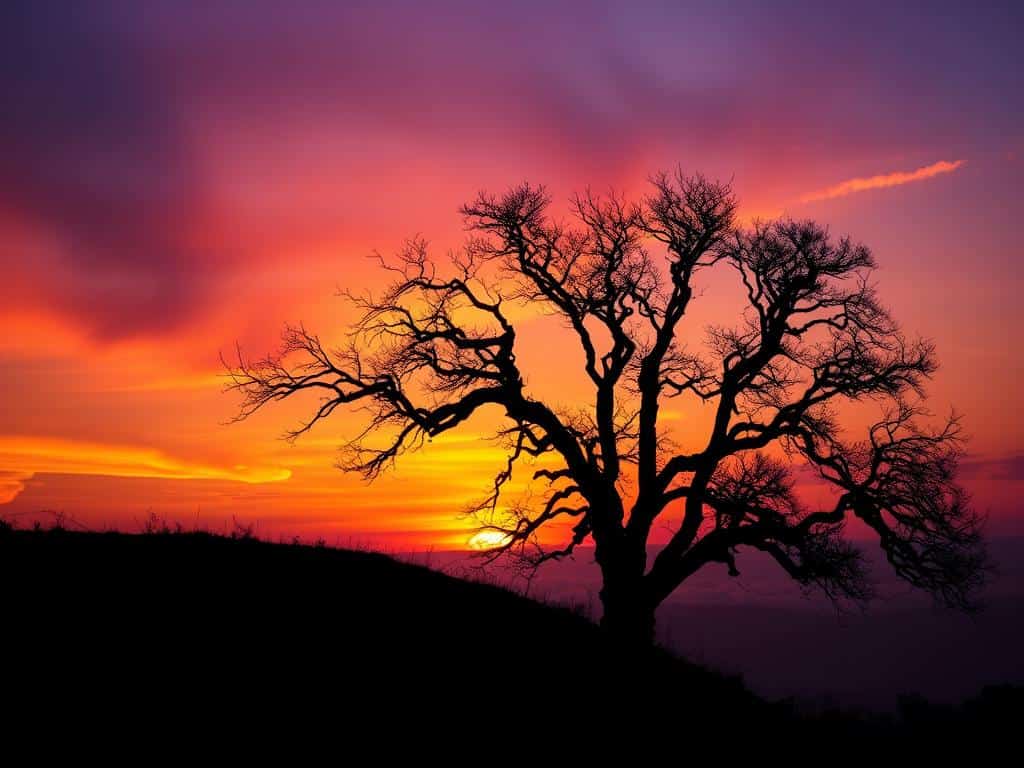
Composition is key in silhouette photography. Place your subject against a clear sky to avoid background mess. Use dynamic poses to add life to your silhouette shot tips. Try capturing silhouettes of objects like trees or city skylines for creative ideas.
When shooting groups, keep them apart to avoid blurry outlines. For portraits, turn the subject’s head to the side to highlight their profile. Negative space around the subject can also draw the viewer’s eye, making the silhouette more striking.
Enhancing Your Silhouette Photos with Post-Processing
Getting stunning silhouette photos is just the start. The real magic happens in post-processing. Adobe Photoshop and Lightroom are top choices for editing silhouette photos. They let you tweak your images to bring out the best.
Adjusting the contrast is a key step. Boosting it by 10-20% deepens the blacks, making your silhouette pop. Adobe Camera Raw’s blacks slider is great for achieving true blackness.
Changing the sky’s color saturation is also important. A 15-20% increase in saturation makes the background more lively. Adjusting the temperature and tint can also change the mood of your photo. Try adding more yellow and magenta for a warm, inviting look.
Don’t forget to tweak the highlights. This makes the background more vibrant and the silhouette clearer. But, be careful not to overdo it. Keeping the natural look of your photo is key. You might also need to adjust the image’s alignment to fix any crooked horizons.
For detailed edits, cloning can be helpful. It lets you duplicate and merge layers to refine your image. With these tips, editing silhouette photos becomes easier and more rewarding.
Remember, silhouette photography is all about contrast. The best time to capture it is during the “golden hours” when the background is much brighter than the subject. Using these techniques will make your silhouette photos stand out, looking vivid and professional.
Conclusion
Mastering silhouette photography is a mix of knowing the basics and trying new things. It’s about picking the right equipment and lighting. It’s also about capturing subjects in a lively way and adjusting your camera settings.
Photographers can make images that tell stories and move people. They use light and shadow to create powerful pictures.
In this article, we covered key tips like using backlight and shooting during sunrise or sunset. We also talked about using manual focus in low light. These tips help make your photos more dramatic.
Remember to shoot in RAW for better color and exposure control. Also, use a small aperture for more depth and sharpness.
Starting your journey in learn silhouette photography means trying new things. You can capture dancers, sunsets, or trees against the sky. Each photo is a chance to show your creativity.
Share your photos, ask for feedback, and keep learning. This will help you make amazing pictures and appreciate the art of silhouette photography even more.
