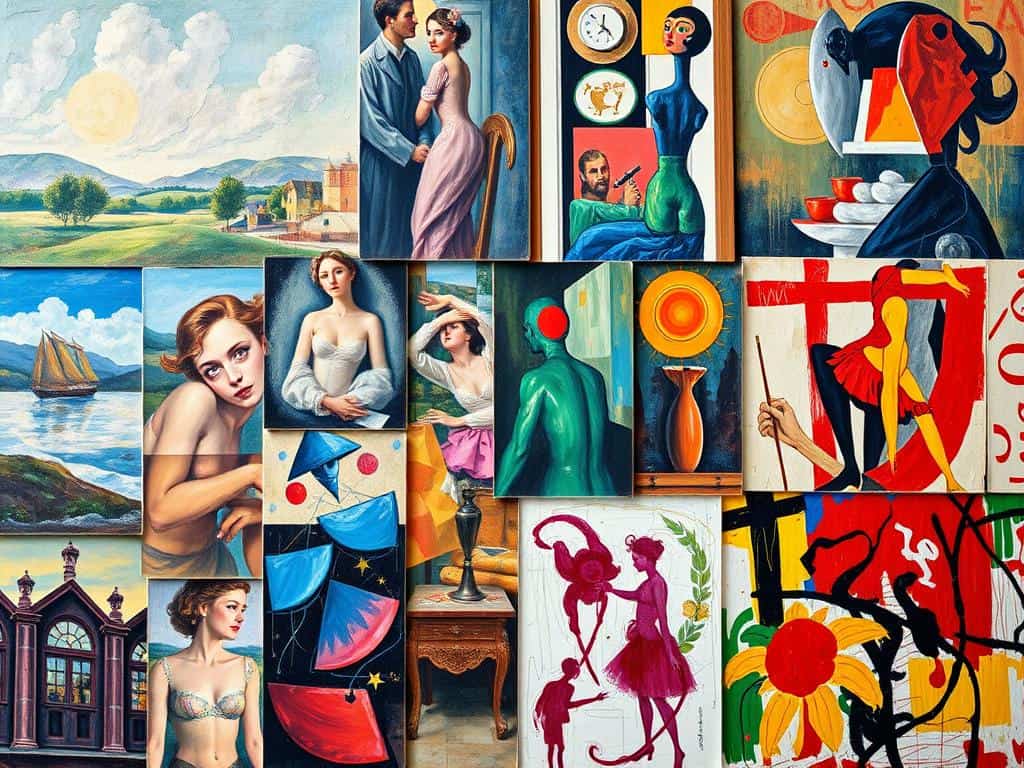

Did you know that over 75% of today’s visual artists find inspiration in past art movements? These movements have made a lasting impact on art history. They set trends that are felt today. Exploring Impressionism, Baroque, and Modernism, I see how they reflect the ideas of their times.
Artists like Claude Monet and Jackson Pollock show us how styles have changed over time. Their work tells a story of human expression. I’m excited to share how these movements shaped our culture. We’ll see how famous artists changed our view of art.
Key Takeaways
- Artistic movements reflect significant changes in society and culture.
- Famous artists pushed boundaries in their respective styles.
- Impressionism and its transition to acceptance showcases artistic evolution.
- Modern art movements continue to influence contemporary creatives.
- Art serves as a mirror of history, showing shifts beyond aesthetics.
The Origins of Artistic Movements
The journey of artistic expression began with early human art. This included cave paintings and engravings. These works were meaningful, used for both practical and religious reasons.
The early art laid the groundwork for later movements. It paved the way for more complex forms of expression.
Early Human Art and Its Evolution
Early human art was a turning point in creativity’s history. Engravings and cave paintings showed the culture and beliefs of early societies. They told stories of daily life and beliefs, creating a sense of community.
As these early forms evolved, they became more complex. This led to the styles seen in later artistic movements.
The Renaissance: The Birth of Individual Expression
The Renaissance, from the 14th to the 17th century, was a time of great artistic change. Artists like Michelangelo and Leonardo da Vinci focused on human emotion and realistic art. This period celebrated the individual’s unique view in art.
The Role of Religion in Early Artistic Movements
Religious art was key in early movements, teaching and inspiring through stories and symbols. Many works focused on religious themes. This allowed artists to share deeper meanings tied to faith and spirituality.
This blend of religion and art shaped future developments. It influenced the connection between creativity and belief systems.
Influential Artistic Movements Through History
Art has changed a lot over time, thanks to different artistic movements. Baroque, Romanticism, Realism, and Impressionism have left their mark. They not only influenced artists of their time but also shaped modern art.
Baroque Art: Movement and Emotion
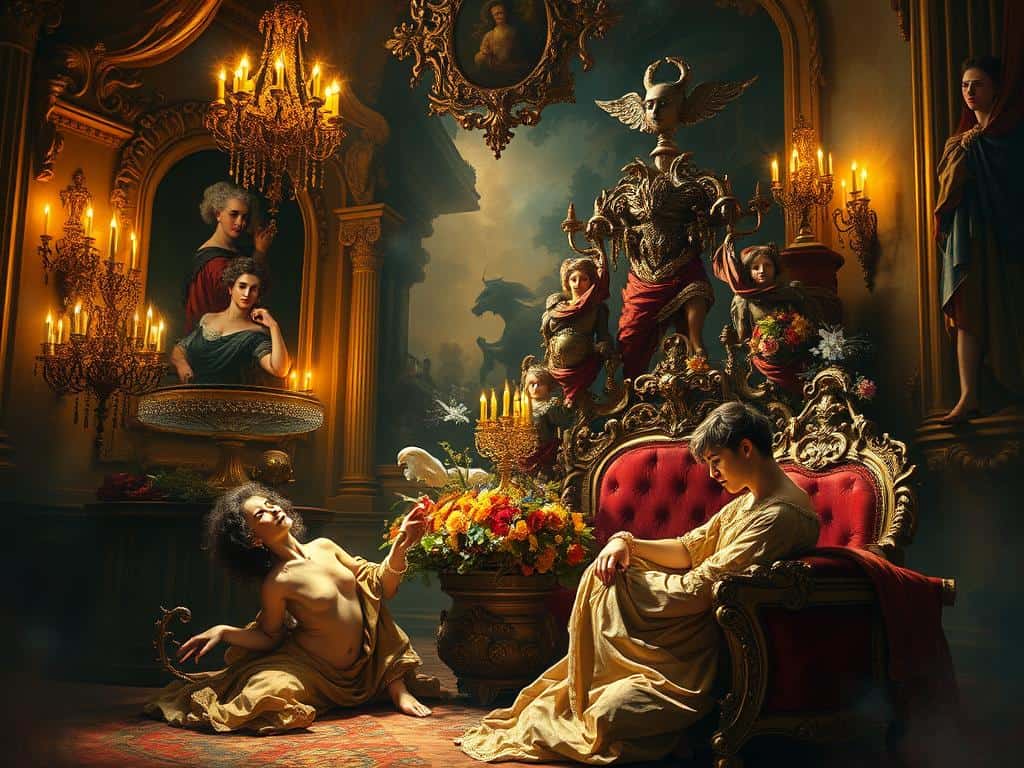
Baroque art came between 1600 and 1750. It’s known for its use of light and shadow to create dramatic scenes. Artists like Caravaggio and Bernini used emotion to connect with viewers, often focusing on religious themes.
This movement was all about visual drama. It pulled viewers into the art, making them feel deeply.
Romanticism: Beyond Rationality to Imagination
Romanticism lasted from 1750 to 1850. It valued emotion over reason. Artists like Caspar David Friedrich turned landscapes into deep, personal spaces.
They explored the sublime and mysterious sides of nature. Their work showed the power of human feelings and personal experiences.
Realism and Its Impact on Modern Art
Realism started in the 1840s. It focused on everyday life and common people. Artists like Jean-François Millet showed the struggles of everyday life.
This movement was a big change. It paved the way for future art by focusing on real experiences.
Impressionism: Capturing Fleeting Moments
Impressionism lasted from 1865 to 1885. Artists like Claude Monet used light and color to capture moments. They used quick brush strokes to show the essence of a scene.
This movement made art more about feeling. It encouraged viewers to experience art with their senses.
Exploring Modern Artistic Movements
Modern art is a rich mix of movements that change how we see things. Each movement shows the big changes in society and culture. It lets us see both personal and shared experiences through art.
Surrealism: The Dive into the Unconscious
Surrealism came as a response to the early 20th century’s chaos. It explored dreams and the unconscious mind. Artists like Salvador Dalí made strange, dream-like art that challenges our thinking.
This movement made us look at our own thoughts and feelings. It showed us that art can reveal our deepest emotions.
Abstract Expressionism: Emotions on Canvas
Abstract Expressionism started after World War II. It focused on expressing emotions through painting. Artists like Jackson Pollock used wild brushstrokes on big canvases.
This movement showed the power of color and form. It made us feel deep emotions through art.
Pop Art: Blurring the Line Between High and Low Culture
Pop Art began in the 1950s. It took inspiration from ads and mass media. Artists like Andy Warhol used images from everyday life in their art.
This movement changed how art and popular culture interacted. It made us think about how commercialism affects art.
Conclusion
Looking back, art movements have deeply influenced our culture. Each era has left a lasting impact, from ancient times to the Renaissance. These movements show how society has changed and what values were important back then.
Art has always been a window into the past and our present. It helps us see how far we’ve come. The journey from modern to postmodern art shows a big change in how we think about art.
This change has shaped how we see and interact with creativity. With over 30 art movements, there’s always something new to discover. This diversity inspires artists and fans alike.
Exploring these art movements, we see a deep connection between art and society. Artists have always reflected their world through their work. By understanding these movements, we can better appreciate today’s art and its rich history.
