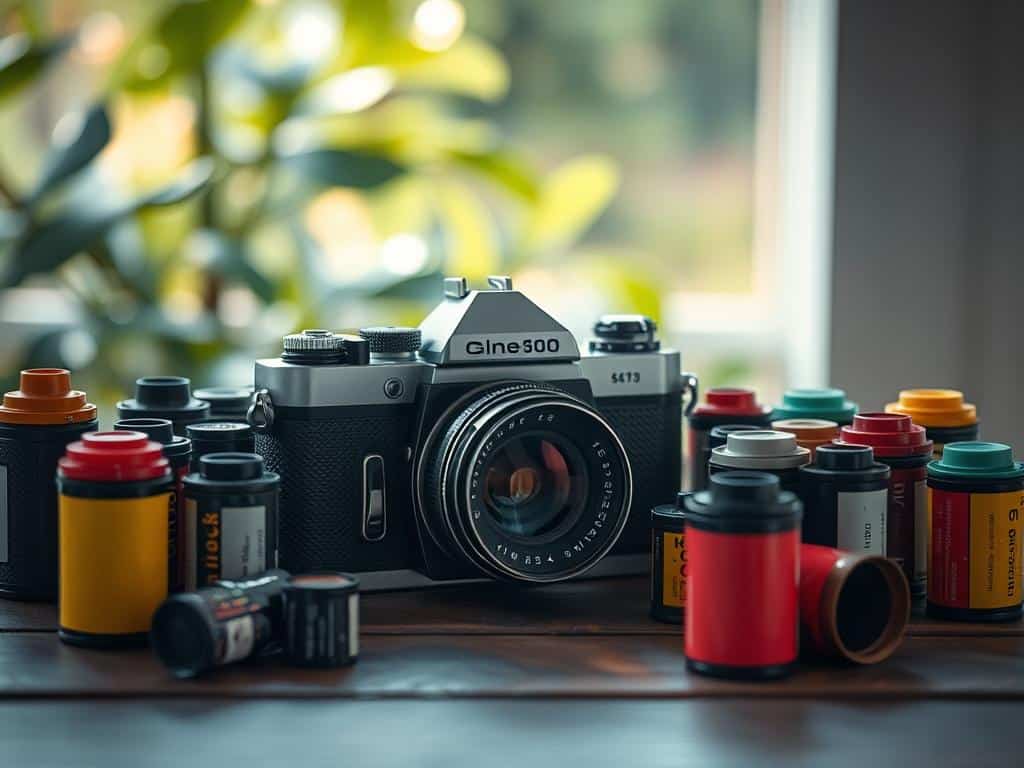

Did you know film photography is getting more popular? Film prices are going up, and some films are harder to find. This shows people want a real, hands-on photo experience, different from smartphones and digital cameras.
The comeback of film photography isn’t just about old times. Sites like Instagram and TikTok are making retro looks cool again. With only 24 or 36 shots per roll, photographers must think more about each picture.
For beginners, there are affordable cameras like the Canon Sure Shot AF-7 and Olympus Superzoom 70G. Even older cameras, like the Olympus OM-10 and Pentax K1000, work great after years. This shows how long-lasting and appealing vintage photography is.
Shooting film is a hands-on experience. You load the film and wait for your photos. This revival has also brought back local labs. Now, it’s easier to get your photos developed and scanned, and there’s a growing community around it.
Key Takeaways
- The growing demand for film photography reflects a shift towards more intentional and authentic photographic experiences.
- Platforms like Instagram and TikTok have popularized retro aesthetics, contributing to the resurgence.
- Affordable film cameras offer a low-cost entry point for beginners, while classic models boast long-term durability.
- The tactile nature of shooting film offers a unique, engaging experience compared to digital photography.
- The reopening of local labs enhances accessibility to film development and strengthens the analog community.
The Charm of Imperfection: Why Grain is Gaining Ground
Film photography is making a comeback, and people love the imperfections it brings. Unlike digital photos, which aim for perfection, film has its own charm. The grain and light leaks add a real, authentic touch that digital photos can’t match.
Embracing the Unexpected
Film photography is all about embracing the unknown. Each roll of film, with only 24-36 shots, makes you think more about each photo. The cost, around $1-$2 per shot, adds to the thoughtfulness of each click.
Film photography workshops are getting more popular, with a 20-30% increase in major cities. This growth, along with a 25% rise in Kodak film sales from 2020 to 2022, shows film’s appeal. It encourages photographers to be spontaneous and artistic.
The Beauty of Built-in Imperfections
Film photography’s imperfections are what make it special. The grain, light leaks, and color variations give photos a unique texture. High ISO films, like Kodak Tri-X 400, add drama to photos.
The wait for film development, from days to weeks, adds to the excitement. Handling film, from loading to shooting, is a tactile experience. It’s about finding beauty in the raw, unfiltered form of photography.
Quotes from Renowned Photographers
Many famous photographers, like Annie Leibovitz, say film captures more emotion than digital. They prefer the texture and feel of film for its storytelling power. This is why film photography is making a comeback, as people seek authenticity over perfection.
Film Photography Basics
Film photography is making a comeback, and many are curious about how to start. Whether you’re new to film or switching from digital, knowing the basics is key. It can really improve your photography skills.
Introduction to Film Photography
Film photography uses light-sensitive film and a chemical process. Unlike digital, where you see your photos right away, film takes patience. You need to pick the right film camera, like SLR, TLR, or point-and-shoot.
The Basics of Loading and Shooting Film
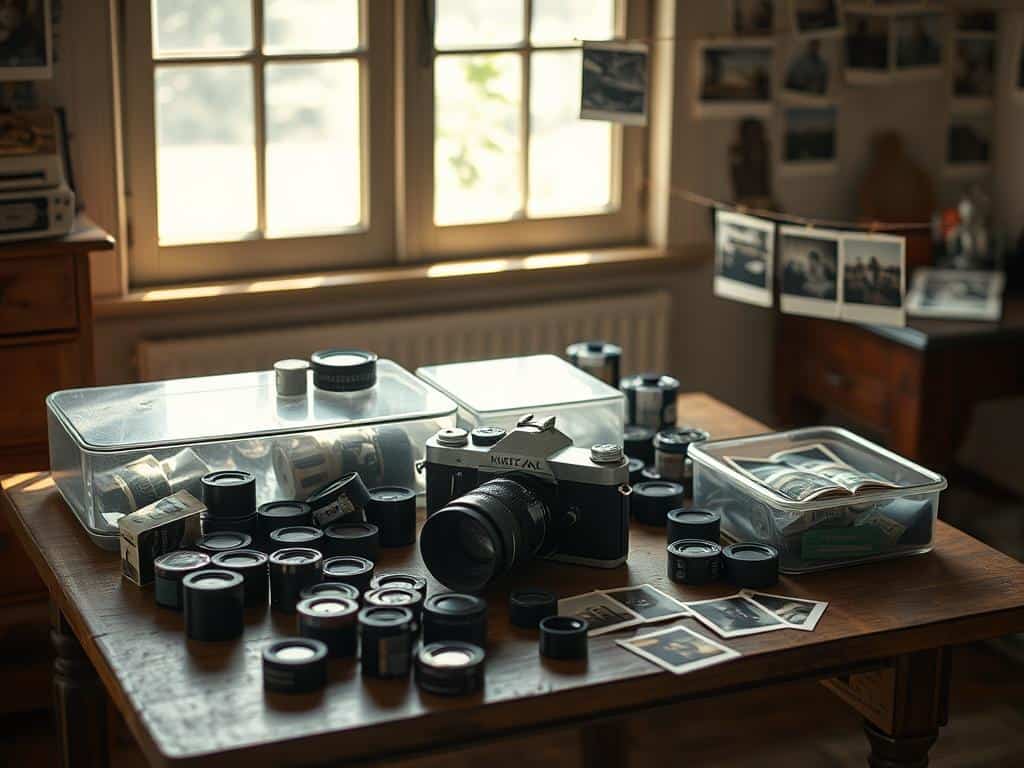
First, learn to load your film camera. Open the back, put in the film, and pull the leader across the back. Make sure it’s aligned with the take-up spool and close it carefully. Practice to avoid exposing the film to light.
When shooting, the Sunny 16 rule is helpful. Use f/16 aperture with a shutter speed that matches your film’s ISO on sunny days. Taking multiple shots at different exposures can help get the perfect shot, even without a light meter.
Different Types of Film
Choosing the right film is important. Black and white films give a classic look with rich contrast. Color films have vibrant colors and a wide dynamic range. Medium format films offer large, detailed images but fewer shots per roll. Instant film is great for those who want to see their photos right away.
Analog vs Digital: Key Differences
Digital photography is flexible with ISO settings and gives instant feedback. But film photography is more deliberate. It has a unique dynamic range and grain that adds character to each photo. Film’s ISO is set by your film choice, so you need to plan ahead. This makes film photography a rewarding challenge for many.
Community and Resources for Beginners
Joining the film photography community can really help you learn. Many people attend workshops, meetups, and online forums to share tips and show their work. Film swaps are a fun way to try new films and learn from others.
There are also many online resources and local stores with lots of information. You can find tutorials, gear reviews, and guides on film photography. Being part of this community can greatly help you improve your skills.
Conclusion
Embracing film photography is more than a love for the past. It’s about the special benefits of analog photography that digital can’t match. With 35mm film, you get 36 shots, allowing for lots of experimentation. Medium format film, with 10-16 shots, makes each photo more meaningful.
This careful approach to photography makes every shot count. It teaches us to think before we click the shutter.
The comeback of film photography shows its lasting place in photography. It’s a hands-on experience that connects us deeply to our art. From loading film to waiting for prints, every step is part of the journey.
Photography becomes more engaging and fulfilling. The sound of the shutter and the wait for prints add to the excitement.
Film formats like 35mm and 120mm offer many choices for photographers. Brands like Kodak and Ilford cater to both new and experienced shooters. Beginners might start with Kodak Portra 400 for its wide color range.
Others might choose black and white films for their timeless beauty and cost-effectiveness. The film community, online and in local groups, supports those exploring this medium. As film photography evolves, it proves its lasting value in our digital age.
