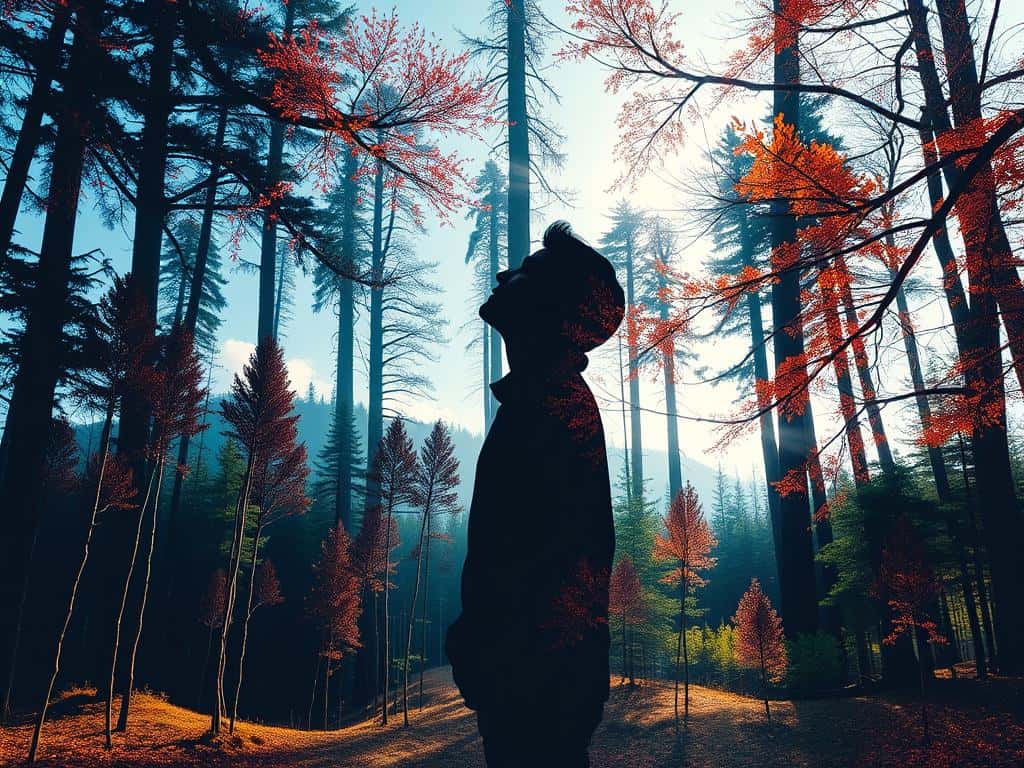

Did you know the digital age made double exposure easier for everyone? This technique lets you mix two photos into one, creating stunning images. It’s perfect for both pros and hobbyists, using film or digital cameras.
Double exposure started in the 1800s. Artists like Man Ray used it in the early 1900s for surreal art. Today, it’s in ads, movies, and music, like Pink Floyd’s “Piper at the Gates of Dawn.”
Key Takeaways
- Double exposure photography emerged in the mid-19th century.
- Spirit photography in the 1800s added ghostly figures to portraits using double exposure.
- Early 20th-century artists like Man Ray utilized double exposure for surrealist expressions.
- The transition to the digital age in the 2000s increased access to double exposure techniques.
- Modern digital cameras often include built-in features for multiple exposures.
- Film cameras require careful calculation for overexposing a frame.
- Specific contrasting elements in double exposure heighten visual interest.
What is Double Exposure Photography?
Double exposure photography combines two images into one frame. It’s used in both film and digital photography. This technique lets photographers tell complex stories through visual layers.
It works by exposing the same film twice or digitally layering two photos. This blend challenges our visual norms and pushes artistic boundaries.
Understanding the Basics
The core of double exposure photography is merging two exposures into one image. This process is different for film and digital photography. Historically, photographers had to expose the same film twice, a precise and patient task.
Now, digital cameras have built-in settings for multiple exposures. This makes it easier and quicker to get stunning results.
When combining images, it’s key to experiment with exposure levels. Subjects might need to be underexposed to avoid washout. Artists in artistic photography focus on light and shape, often trying multiple times to get it right.
The unpredictability and creative risk of double exposure make it appealing. Photographers love exploring its intricacies through projects.
The History and Evolution
The history of double exposure began in the late 19th century. It was one of the first special effects in movies. The 1898 film “Four Heads are Better Than One” by Georges Méliès is an early example.
It became popular in surrealism, thanks to artists like Man Ray and László Moholy-Nagy. They used it to layer meanings and stories in one frame.
In the mid-20th century, double exposure was used in advertising. It helped brands grab attention. Today, digital tools like Photoshop have made it even more creative. Films like “Blade Runner 2049” have used it for stunning visual effects.
Techniques for Double Exposure Photography
Double exposure photography has been around for over a century. It combines creativity with technical skill. We’ll look at three main ways to do it: using cameras, software, and film.
In-Camera Double Exposure
Many digital cameras, like the Canon 5D Mark III, have a double exposure feature. This lets you mix two photos together right in the camera. The camera’s Multiple Exposure mode is key.
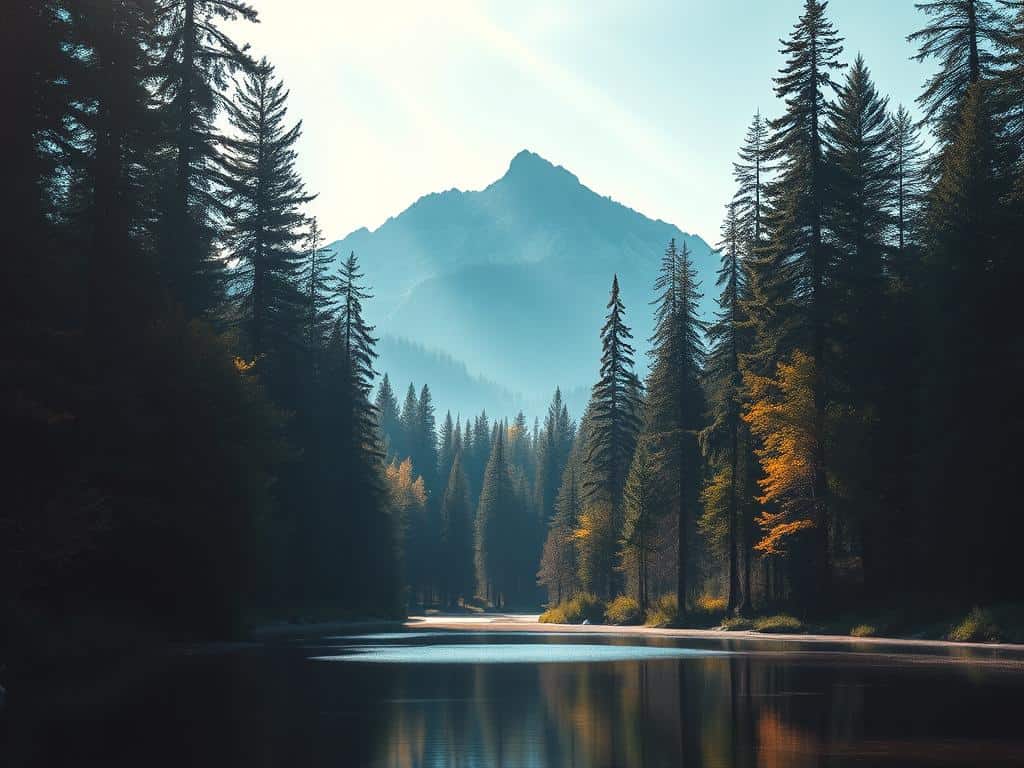
Using Live View mode helps you line up the images. The best results come from placing the second image in the darker parts of the first. This creates cool contrasts, like a dark figure against a bright sky.
Post-Processing with Software
Software like Photoshop gives you more control over double exposures. You can use layer masks, blending modes, and adjust opacity. This lets you mix images in a detailed way.
About 90% of photographers use digital tools for editing. Apps like Snapseed make it easy for beginners. They help you create stunning double exposures without needing to be an expert.
Using Film for Double Exposures
Film photography offers a unique charm for double exposures. It requires a hands-on approach. By exposing the same frame twice, you get interesting results.
Black & white films work best because they can handle different exposures well. Color negative films also do well. To get the right balance, underexpose the first shot by 50%.
Films like Portra 400 and Portra 800 are great for double exposures. This method takes patience and careful metering. It adds a nostalgic touch that many people love.
Conclusion
Double exposure photography lets photographers explore new ways to tell stories. It combines different images into one, creating something unique. This technique can be done with digital tools or old film methods.
Trying new things is key to getting good at double exposure. Photographers can find many ways to use this technique. By mixing different parts of the picture, they make a photo that speaks volumes.
Now, many cameras can handle double exposures easily. Using special settings and editing tools can make the photos even better. Joining photography groups helps photographers learn and share ideas. It’s a fun way to discover new things in photography.
