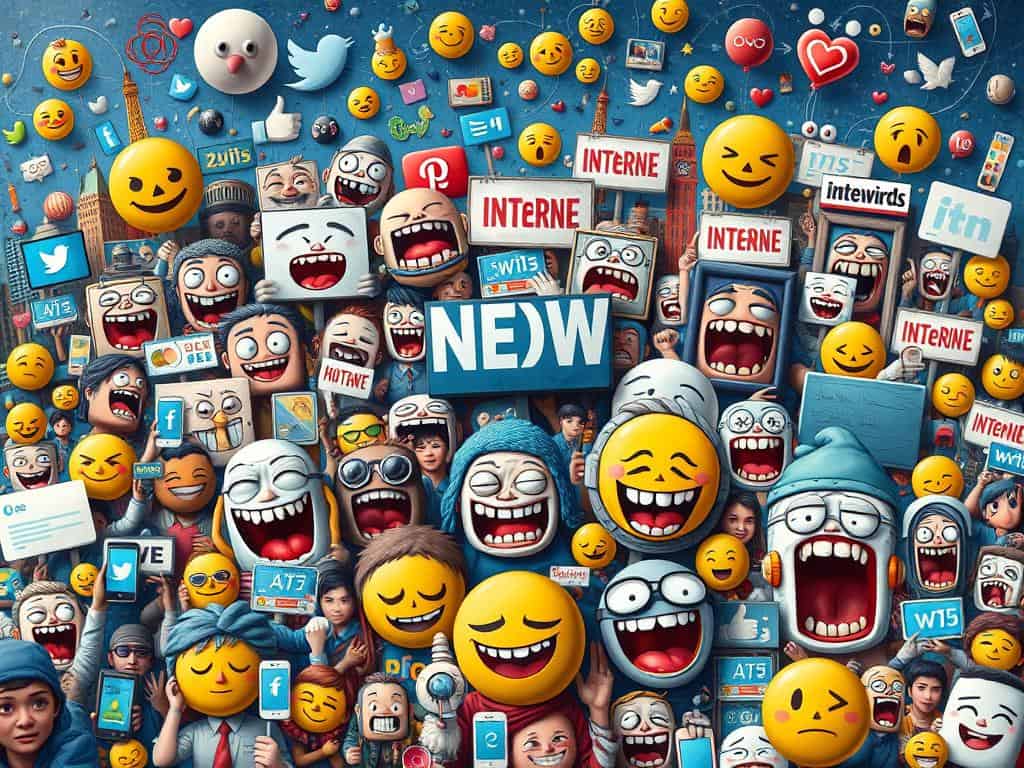

Did you know Merriam-Webster added “meme” to its dictionary in May 2015? It was alongside words like “emoji” and “clickbait”. This shows how big memes have become in our online world. As we dive into internet memes, we’ll see how humor, culture, and change are linked through memes.
Memes have grown from simple jokes to powerful online messages. The “Distracted Boyfriend” and “Expanding Brain” memes are now big in online talk. They show how meme culture has evolved.
A 2018 study found memes can affect communities in fun and deep ways. We’ll look at how memes engage people and make them think.
Key Takeaways
- The term “meme” was officially recognized by Merriam-Webster in 2015.
- Memes like “Distracted Boyfriend” and “Expanding Brain” began trending in 2017, showing their lasting appeal.
- Memes have both fun and serious sides, shaping online talks.
- Research shows 70% of 18-34-year-olds used social media more during COVID-19, making memes more popular.
- Simple designs and the “internet ugly” look are common in memes, with 60% showing these traits.
Viral Memes That Defined Internet Culture
Viral memes are key in internet culture, used for both humor and serious messages. They change how we talk and highlight big issues in a fun way. Looking at popular memes shows how they start and why they matter to us online.
Popular Memes and Their Origins
Memes like “Distracted Boyfriend” and “Expanding Brain” started simple but became big hits. The “First World Problems” meme, from 2011, makes fun of small complaints from the wealthy. These memes mix laughter with real-life observations, showing the heart of internet culture.
Impact of Memes on Politics and Society
Memes do more than entertain; they shape politics and society. The “Mike Pence Fly” meme from 2020 shows how humor can influence big talks. Memes pack complex ideas into simple images, starting important discussions. This shows memes are more than just fun; they reflect our shared feelings and thoughts.
Internet Memes Explained: Decoding Humor in Digital Context
Exploring meme language and formats reveals how humor spreads online. Memes combine images and text to comment on society, politics, and daily life. They have evolved from simple images to complex, layered content that connects with many.
Understanding Meme Language and Formats
The term “meme” was first used by Richard Dawkins in 1976. Memes like the “Distracted Boyfriend” cover themes like cheating and fandom. They show how humor in meme culture sparks deep conversations.
Images like the “This is Fine” dog have become popular. They touch on big issues like fear of the unknown, even during tough times like the COVID-19 pandemic.
The Evolution of Meme Culture
The growth of meme culture mirrors tech progress and social media trends. Early memes were simple images and videos. Now, they carry deep social messages, thanks to platforms like Reddit and Twitter.
New meme styles, like “X in Y,” have appeared. They express complex feelings and social critiques, bringing people together online. This evolution shapes how we connect and find our place in the world.
Conclusion
Reflecting on viral memes and meme culture, it’s clear they’re more than just jokes. They are a deep way to communicate, showing and shaping our world. Memes use images, videos, and stories to share feelings and stories, helping us talk about important issues.
Memes can fit into many situations, from teaching tools to key parts of ads. This shows how flexible and powerful they are. They can make a big difference in how we see and interact with the world.
Research shows some memes last for years, touching many people. The idea of a meme, from Richard Dawkins, shows how ideas spread in our culture. The internet has made sharing these ideas faster, making memes a key part of our online talks.
As memes keep changing, they help us understand our shared experiences. Being part of meme culture lets us join big conversations about our lives today. It’s amazing how a simple meme can spark deep talks about us and our society, showing the power of laughter and thought.
