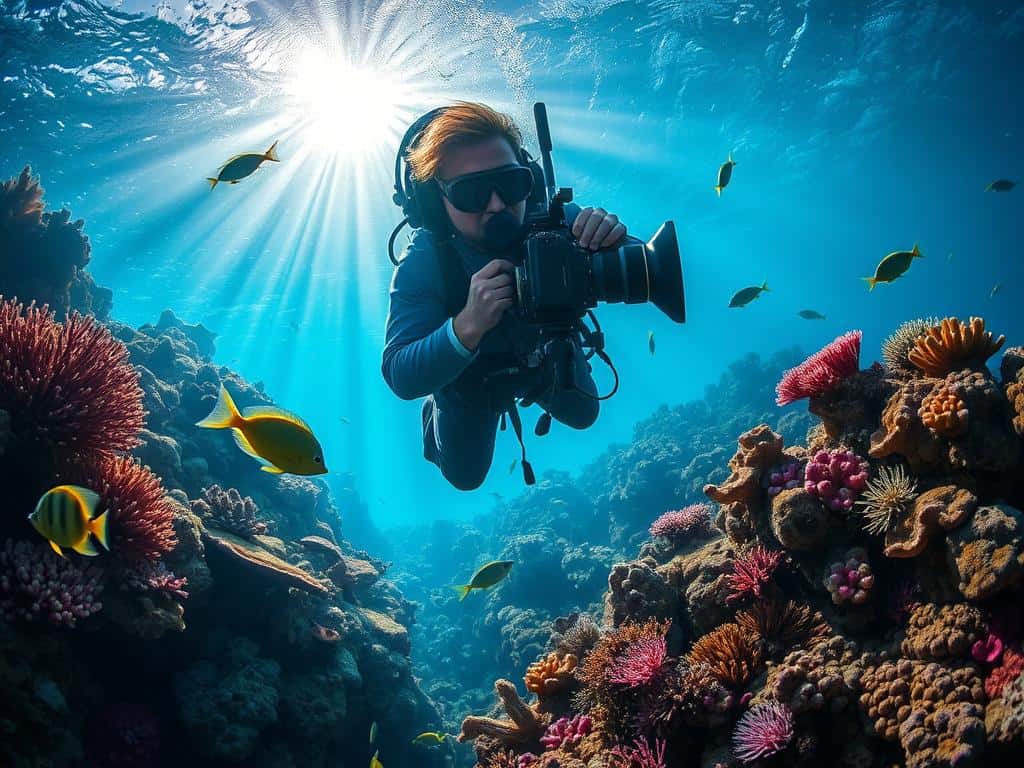

Did you know that about 70% of divers feel unsure about their underwater photography skills? This shows the importance of learning and practicing to get amazing shots. Choosing the right waterproof cameras is key to getting stunning photos.
The underwater world has its own challenges, like less light and color loss. But with the right guide, you can turn your dives into breathtaking photos. Whether it’s a stingray’s glide or coral’s beauty, underwater photography is more than just tech skills. It’s about understanding the sea.
Let’s dive into how to use your camera well, handle underwater conditions, and capture the sea’s beauty.
Key Takeaways
- Understanding your goals can greatly improve your underwater photography skills.
- Choosing the right waterproof cameras is key for quality images.
- Buoyancy control makes your shots clearer.
- Pre-dive gear prep stops equipment failure and boosts success.
- Proper lighting and strobes add color and detail to photos.
Getting Started with Underwater Photography
Starting your underwater photography journey means making important choices. You might want to capture marine life, create art, or take exciting diving shots. Knowing your goal is key.
Determining Your Goals
First, decide what you want to achieve. Do you want to show off marine life, make abstract art, or document your dives? Your goals will guide your equipment choices.
Basics of Underwater Photography
It’s vital to understand how water affects light. Natural light works best below 5-10 meters. The best time to shoot is between 10 AM and 2 PM.
Knowing the “Rule of Thirds” and focusing on eyes for wildlife shots can make your photos better. This rule divides the frame into nine parts for balanced shots.
The “Rule of Thirds” suggests dividing the frame into nine equal rectangles and positioning main subjects at their intersections for balanced composition.
Learning manual camera settings is essential. This includes shutter speed, aperture, and ISO. Most photos need some editing for color and clarity.
Selecting Your Equipment
Picking the right gear is critical. You’ll need waterproof cameras and strong housings. Most housings go up to 30 meters deep.
For better shots, get close to your subject. Use aperture priority mode at F2.8 for bright, shallow coral scenes.
Manual white balance is key for true colors below 10 meters. Flash diffusers improve lighting. Use an internal flash or strobe for better image quality.
Essential Techniques and Tips
Before you dive into the deep blue, getting ready is key. Make sure your gear is waterproof and works well. This can stop problems underwater.
Prepping Your Gear Before Diving
Getting your waterproof cameras and gear ready can save you trouble. Check O-rings and seals to keep things dry. Also, practice in pools to get better before diving in the ocean.
Mastering Buoyancy Control
Controlling your buoyancy is vital for safe and good diving shots. It keeps your photos clear and doesn’t harm sea creatures. Learning this skill makes your photos look professional.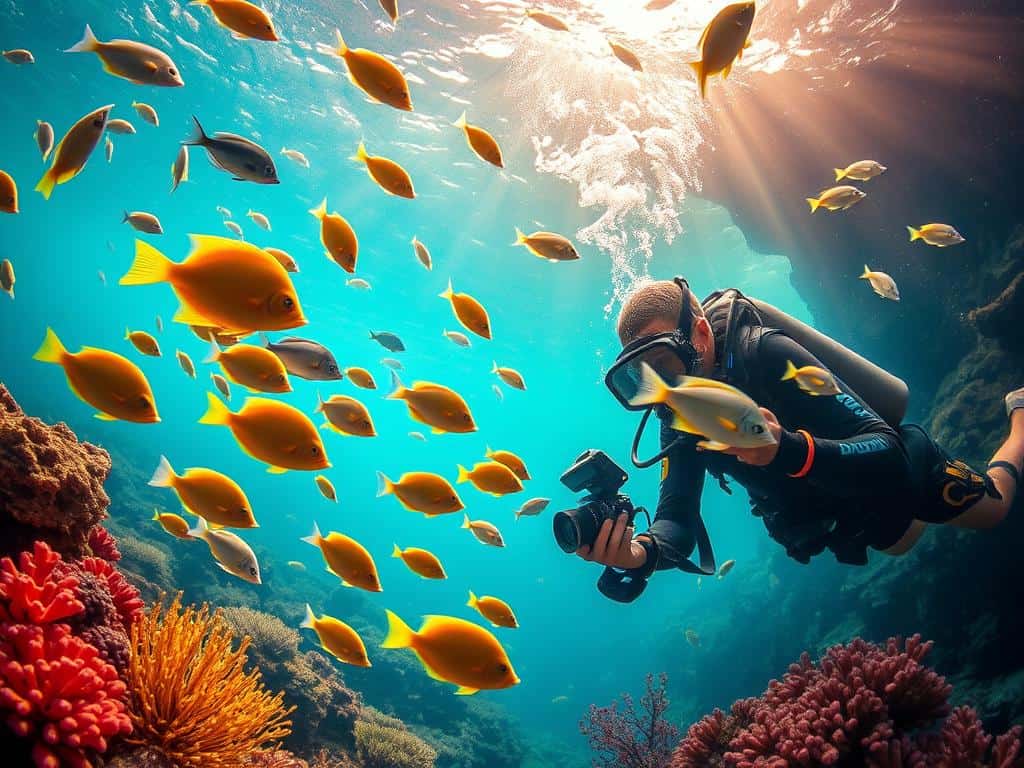
Shooting Techniques to Avoid Backscatter
Backscatter can ruin your underwater photos. To avoid it, shoot upwards and use natural light. Wide-angle lenses also help. Plus, knowing how light works underwater lets you use it best between 10 AM and 2 PM.
Underwater Photography Guide: From Camera Gear to Lighting
Diving into underwater photography is exciting but needs the right gear and skills. We’ll explore key elements for stunning underwater photos. This includes choosing the right camera and housing, and mastering underwater lighting.
Choosing the Right Camera and Housing
First, pick the right equipment. Waterproof cameras like the Olympus TG series are great because they’re tough and easy to use. For example, the Olympus TG6 is better than action cameras for underwater shots.
For shallow dives, the Olympus TG series works well up to 15 meters. But for deeper dives, you need a diving housing. This can take you up to 60 meters. It’s important to find a housing that fits well, as some users struggle with button layouts.
Importance of Proper Lighting
Good lighting is key underwater. Colors fade fast, with red gone by 15 feet and all colors by 60 feet. Artificial light is vital for clear images, even in deep water.
Clear water lets light travel further than choppy water. So, using strobes or external lights like the Aqualite Pro 2 or Aqualite Max is essential. These lights adjust to different conditions, helping capture vibrant scenes.
Utilizing Strobes and Flashes
Strobes and flashes do more than just light up the scene. They highlight subjects, textures, and colors. It’s important to mix artificial light with natural light for a natural look. Getting close to subjects helps avoid backscatter and improves image quality.
Always check your gear for leaks, as they can happen in 10-15% of dives. Using strobes well and keeping your gear in good shape ensures clear, colorful photos, even in tough conditions.
Conclusion
Starting your underwater photography journey opens a world few see. This guide shows how key preparation is. From choosing the right camera and lighting to mastering buoyancy, it’s all important.
Many underwater cameras can go up to 30 meters deep. This lets photographers take amazing shots.
Knowing the best depth for shooting is key. Natural light works best at depths of 5 to 10 meters. The best time for diving shots is between 10 AM and 2 PM, when the sun is highest.
Using strobes and flashes can make images better. They help with backscatter and light up subjects. But, they cost more.
Applying the “Rule of Thirds” and focusing on eyes makes photos more interesting. Up to 90% of sea life lives deep. This offers unique photo chances.
While challenges exist, like keeping gear and controlling buoyancy, learning and caring for the environment are key. With practice, each dive becomes a new chance to improve your underwater photography skills.
