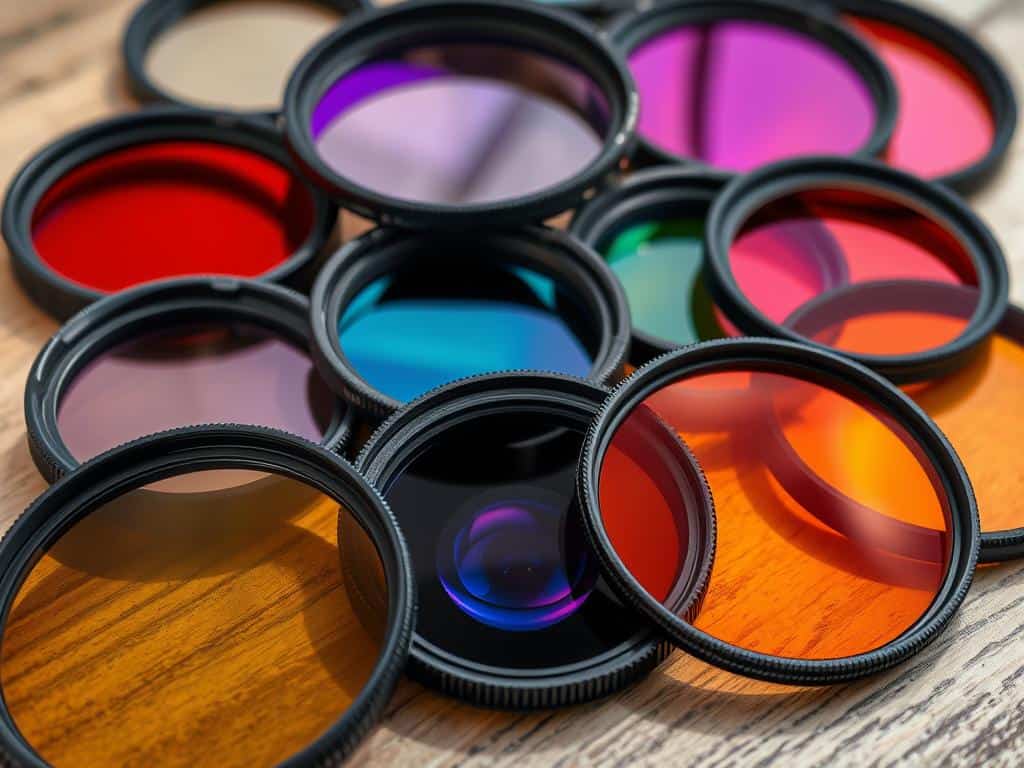

Did you know that about 70% of photographers like using physical lens filters? They prefer these over digital editing for certain looks. This shows how important lens filters are in photography. Even with today’s tech, many photographers choose softer images for a deeper feel.
In this guide, we’ll look at the top lens filters for better photography. These can make your photos clearer and more colorful. We’ll cover creative filters and must-haves like ND and polarizing filters. Knowing how to use these can cut down your editing time a lot. Let’s explore how lens filters can make your photos amazing.
Key Takeaways
- Lens filters are key for better photography clarity and color.
- Physical filters give you control right in the camera, saving editing time.
- 70% of photographers choose physical filters for certain effects.
- ND and polarizing filters are must-haves for landscape shots.
- Creative filters are gaining popularity, with a 40% rise in use among new photographers.
Understanding the Importance of Lens Filters
As a photographer, I’ve learned how much lens filters can improve my photos. These small glasses fit over the camera lens. They change how light and color work, affecting the photo’s mood. With so many filters out there, they’re key for anyone wanting to get better at photography.
What Are Lens Filters?
Lens filters help with tricky lighting, a common problem for photographers. They come in types like UV, polarizing, and ND filters. Each one solves a different issue. UV filters protect lenses, while polarizing filters reduce glare and boost colors, perfect for landscapes.
Benefits of Using Lens Filters in Photography
Lens filters offer many benefits. They improve photo quality by controlling light and cutting down glare. This makes photos more vibrant. They also protect lenses from scratches and dust, helping them last longer. Using top-notch filters keeps images sharp and clear, avoiding the problems of cheaper ones.
Types of Photography That Benefit from Filters
Various photography styles benefit from specific filters. Landscape photographers use ND filters for long exposures, creating a magical effect. Portrait photographers might use polarizing filters to enhance colors and soften skin tones. Knowing which filters to use for each type of photo helps me get the best results.
Best Lens Filters for Creative Effects
Looking to make your photos stand out? Creative lens filters are a great way to do just that. Each filter has its own special touch, opening up a world of creative possibilities.
Diffusion Filters for Soft and Dreamy Looks
Diffusion filters turn regular photos into stunning, ethereal images. They add a soft glow, making highlights pop and edges smooth. Perfect for portraits, they make subjects look soft and radiant.
These filters also cut down on editing time. They’re a must-have for any photographer wanting to capture beauty without extra work.
Kaleidoscope Filters for Unique Perspectives
Kaleidoscope filters add amazing patterns to your photos. They work in different ways depending on the lens you use. Great for studio or artistic shots, they help create unforgettable images.
Radiant Filters for Vibrant Flare Effects
Radiant filters add a pop of color and mood to your photos. They create striking flares and color casts, perfect for retro looks. They bring a sense of nostalgia to your images, making them both enchanting and vibrant.
Lens Flare Filters for Cinematic Touches
Lens flare filters give your photos a touch of classic cinema. They create colorful glares, similar to those in old movies. They’re a budget-friendly way to add a cinematic feel to your photos.
With different flare options, you can experiment with various effects. It’s a fun way to add excitement to your shots.
Split Diopter Filters for Enhanced Depth of Field
Split diopter filters are key for telling stories through photos. They let you focus on both the near and far parts of your scene. This is super useful in movies, adding depth and interest to your shots.
These filters can completely transform your photos. They’re a powerful tool for any photographer or filmmaker.
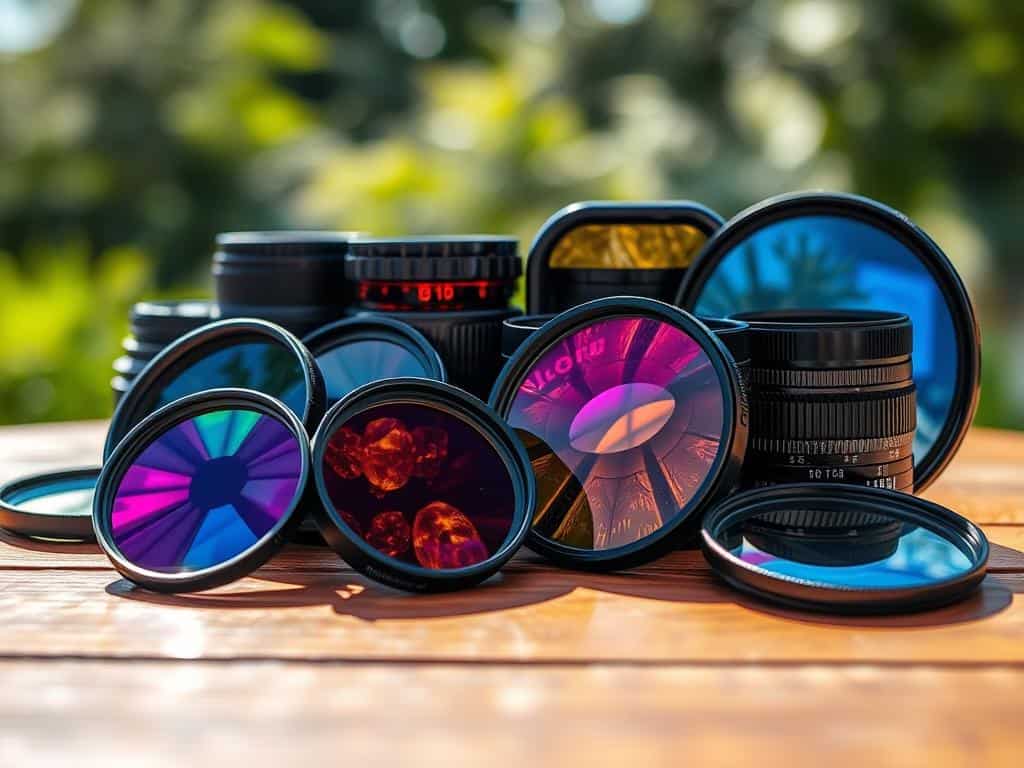
Essential ND and Polarizing Filters
Learning to use ND and polarizing filters can really improve my photos. Each has special benefits for different shooting situations.
Exploring ND Filters for Exposure Control
ND filters are key in my photography kit. They control light, letting me take longer exposures without overexposing. For example, an ND64 filter blocks a lot of light, perfect for misty water shots.
This control over light helps me capture stunning images, even in bright sunlight.
Understanding Polarizing Filters for Reflection Reduction
Polarizing filters are a top choice for outdoor and landscape shots. They reduce reflections and boost color, making skies deeper and more vivid. Just by rotating the filter, I can change a sky’s color.
Many photographers start with polarizing filters because they make colors pop and contrast better.
Creative Uses for Variable ND Filters
Variable ND filters make my shoots more flexible. I can adjust light levels as needed, which is great for capturing fast or slow scenes. Their ease of use makes them a must-have for me.
How Graduated Filters Help in Landscape Photography
Graduated filters are essential for landscapes. They let me balance sky and ground exposures in one shot. Available in rectangular shapes, they work best with a filter holder.
Whether using a 2 stop or 3 stop filter, they help me get better images by adjusting light levels.
Conclusion
I’ve learned a lot about lens filters in my photography journey. They do more than just protect my camera. They also make my photos look better, telling a story with every shot.
There are filters that add a special touch to my photos. And then there are ND and polarizing filters that make sure my images are top-notch. Learning about these tools has opened up new ways for me to express my creativity.
Lens filters are really important for taking amazing portraits or landscapes. For instance, UV filters from brands like Hoya and B+W keep my photos clear. By picking the right filter, I’ve turned many of my photos into stunning works of art.
Using lens filters shows my dedication to doing great photography. I suggest that other photographers try out different filters, like those from K+F Concept and Canon. They can add depth, color, and beauty to your photos. In short, lens filters are essential for taking amazing pictures.
