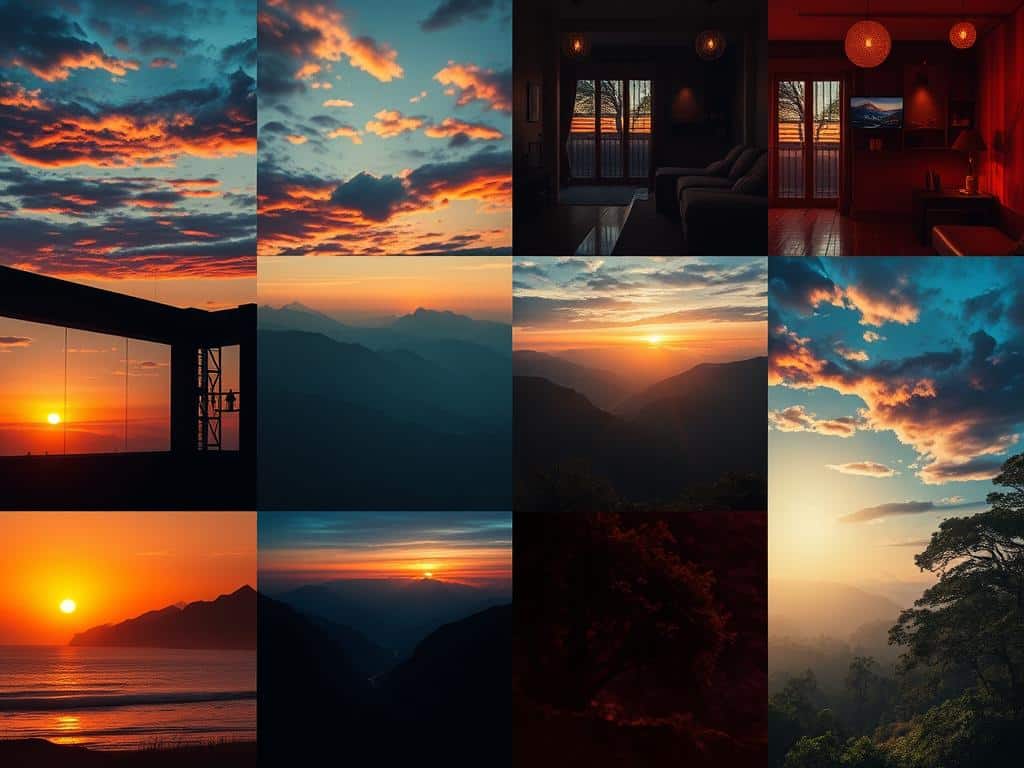

Did you know that Rec. 709, the most common color space profile, started in the 1990s? It’s a key part of many films and videos today. But, with new HDR profiles like Rec. 2020 and Rec. 2100, knowing color grading is more important than ever.
Color grading is not just a technical skill; it’s an art. It can turn ordinary footage into a stunning story. By mastering it, filmmakers can control the mood and feel of their work. Plus, tools like Lightroom LUTs open up endless ways to tell stories.
Key Takeaways
- Cinematic color grading enhances the emotional impact of videos.
- Understanding color grading techniques can set my work apart in visual storytelling.
- Using RAW or Log footage can influence storage needs and processing power.
- LUTs are powerful tools that can dramatically change the visual tone.
- Color grading involves both aesthetic and corrective processes.
Understanding Cinematic Color Grading
Color grading is key in film production, shaping both visuals and tone. It’s like an artistic brush that sets the mood and emotional feel. Knowing how it works helps filmmakers connect better with their audience.
What is Color Grading?
Color grading changes raw footage to have consistent colors and looks. It’s more than just making colors right; it’s about using them to tell a story and evoke feelings. This way, it shapes how viewers see the film.
The Importance of Color Grading in Film
In movies, color grading sets the mood and guides how we feel. For example, “Blade Runner 2049” uses yellow to show important moments of discovery. “The Grand Budapest Hotel” has bright colors to match its magical story. A good color grade can make a film’s story hit home with viewers.
Difference Between Color Grading and Color Correction
Color grading and color correction are both important in editing, but they’re different. Color correction makes sure everything looks natural and consistent. Color grading, on the other hand, is about making artistic choices that change the film’s feel. Knowing this helps filmmakers use each technique to tell their story effectively.
Key Techniques for Effective Color Grading
Learning key techniques in color grading is vital for filmmakers. Choosing the right format and grading methods is key. RAW or LOG format during capture gives a lot of flexibility for color changes later.
Shooting in RAW/LOG Format
RAW or LOG format keeps the most detail. They give a flat look perfect for color grading. This way, I can change colors freely, getting the look I want without losing quality.
Many pros choose these formats for their color accuracy and detail. It’s a critical step in the grading process.
Primary and Secondary Color Grading
Primary color grading adjusts overall contrast and color. Secondary grading focuses on specific colors or details. Balancing these techniques can change the mood of the footage a lot.
This process makes the visuals more appealing and helps tell the story better. It evokes emotions and enhances the story.
Using LUTs for Consistency
LUTs (Look-Up Tables) make grading faster and consistent. They help achieve a professional look quickly. I use them in Premiere Pro to improve footage fast.
They’re great for beginners, providing pre-set looks that can be adjusted. LUTs ensure the visuals are consistent across scenes, improving the final output.
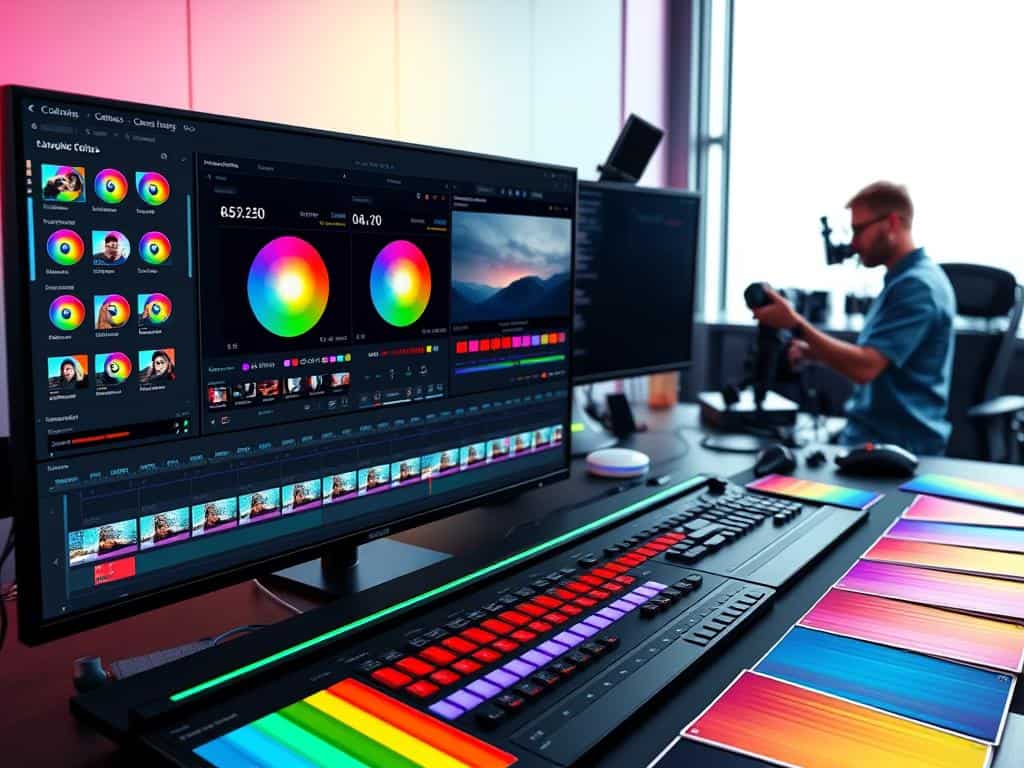
Cinematic Color Grading Techniques
Understanding cinematic color grading techniques helps me tell stories better. Different styles create unique looks for various stories. By mastering these styles, I can make my projects more engaging and visually appealing.
Looking at iconic films shows the power of color grading. These examples give us insights into how to use these techniques effectively.
Popular Color Grading Styles
There are many popular color grading styles. For example, the teal-orange style is common in action movies. It contrasts cool and warm tones, making scenes more exciting and focusing attention.
Monochrome grading is great for deep emotional stories. It removes color, highlighting contrast and texture. The bleach bypass technique, used in war films, gives a gritty look that adds realism and tension.
Knowing these styles helps me pick the right one for my projects. I can match the color treatment to the story’s emotional core.
Case Studies of Iconic Films
Looking at iconic films shows how color grading affects how we see them. “Mad Max: Fury Road” uses high-contrast colors to show chaos and urgency. Its bright colors make it stand out.
“The Revenant” uses cooler colors to match its harsh settings and survival themes. This shows how color grading is key to storytelling, matching visuals with the story’s mood.
Conclusion
Exploring cinematic color grading techniques has shown me how vital it is for filmmakers. It’s not just about making things look good. It’s about telling stories in a way that touches people’s hearts. Knowing the difference between color correction and grading is key to using these techniques well.
Shooting in RAW or LOG format lets me work with colors in detail. Techniques like primary and secondary grading help me focus on certain parts of my films. Trying out different styles can make my stories even more emotional. For example, “Blade Runner 2049” uses yellow to show enlightenment, and “The Grand Budapest Hotel” has a bright, playful look.
Learning to master color grading takes practice and creativity. With tools like DaVinci Resolve and the right monitor, I can make my videos stand out. This way, I can create visual experiences that really grab my audience’s attention.
