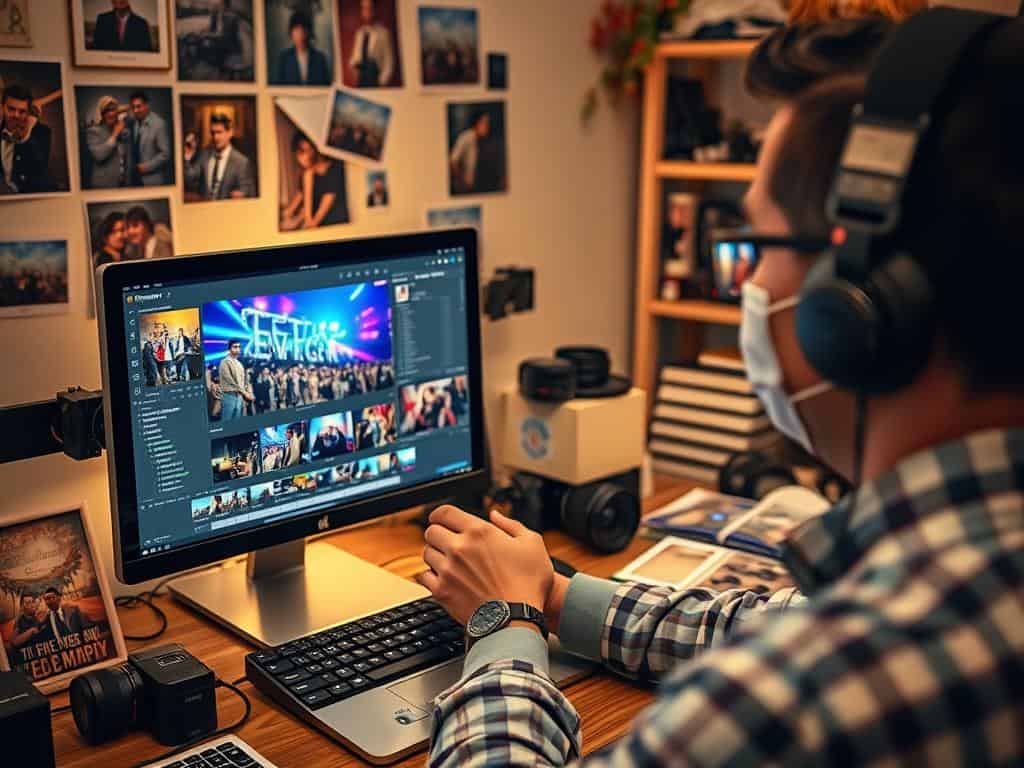

Did you know 90% of pro event photographers shoot in RAW? This lets them tweak every pixel in editing. Learning to edit event photos well is key to making your images pop. Whether it’s a lively wedding or a big corporate event, the right editing tricks can make a big difference.
In this section, we’ll look at essential editing tricks. We’ll cover color, lighting, and getting ready before you start editing. Understanding these basics can really boost your photography. Let’s explore how to make your event photos stand out and have more impact.
Key Takeaways
- Shooting in RAW provides better editing flexibility and image quality.
- Discussing the event schedule with clients is key for capturing important moments.
- Arriving early lets you assess and prepare the venue fully.
- Improving lighting with the right flash placement can greatly enhance photos.
- Editor techniques can make dark areas more visible in post-production.
- Batch processing helps manage a lot of images efficiently.
- Looking professional can improve how you interact with clients and make them feel at ease.
Essential Techniques for Editing Event Photography
As an event photographer, I know how important editing techniques are. Color correction is key for getting skin tones right and making images pop. I use tools like Adobe Lightroom and Photoshop for this. These tools help with white balance, color, and brightness.
Studies show that 75% of event photographers focus on color correction. They do this to make sure all their photos look the same.
Understanding Color Correction
Color correction makes photos look better. It helps me make each image look cohesive and professional. Research shows that uniform color grading can make a portfolio look 70% more professional.
Also, using custom white balance saves time. It makes color correction faster, helping me finish projects quicker.
Implementing Lighting Adjustments
Lighting is critical in event photography. It can change how clear and moodful an image is. Adjusting brightness and reducing noise improves photos taken in the dark.
About 60% of these images get a lot better with noise reduction. This shows how important lighting adjustments are.
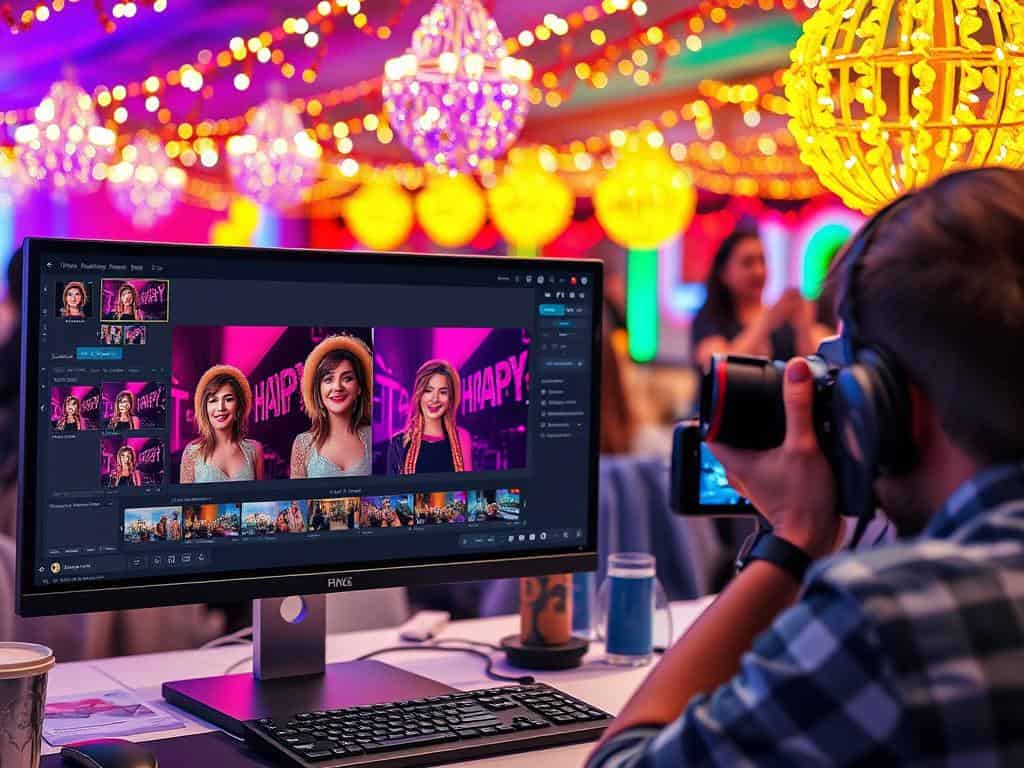
Editing Event Photography: Advanced Tricks for Stunning Results
Enhancing event photos with advanced editing tricks can make a big difference. Two key techniques stand out: creating unique blurs and adding eye-catching reflections. These can turn ordinary photos into stunning works of art.
Creating Unique Blurs
Unique blurs add an artistic touch to photos. I use blurring to focus attention on certain subjects and show motion. Adobe Photoshop is key for this, allowing me to mimic slow shutter speeds.
This creates dynamic images that beautifully capture movement. Layering images adds to the effect, making the final result stand out.
Adding Eye-Catching Reflections
Eye-catching reflections add depth and creativity to photos. I love adding reflections to fill empty spaces and boost the photo’s impact. By duplicating parts of an image and adjusting them, I create striking visuals.
These techniques transform ordinary event photos into captivating masterpieces. They make a big difference in the final result.
Conclusion
As I finish this recap on editing techniques for event photography, it’s clear that mastering both basic and advanced methods is key. These strategies, from color correction to unique blurs, are essential for anyone looking to improve their event photos. They make the images more appealing and help create strong emotional connections with viewers.
Looking to the future, I suggest you keep practicing and trying out new techniques. Whether it’s working with event planners or using different perspectives for storytelling, the journey goes beyond just technical skills. It’s about being creative and innovative in post-production, keeping your photos fresh in a changing market.
In conclusion, high-quality event photography is a powerful tool for both personal and professional projects. It greatly enhances audience engagement. With the right editing tricks, I’m excited to create compelling stories that connect with viewers and leave a lasting impact.
