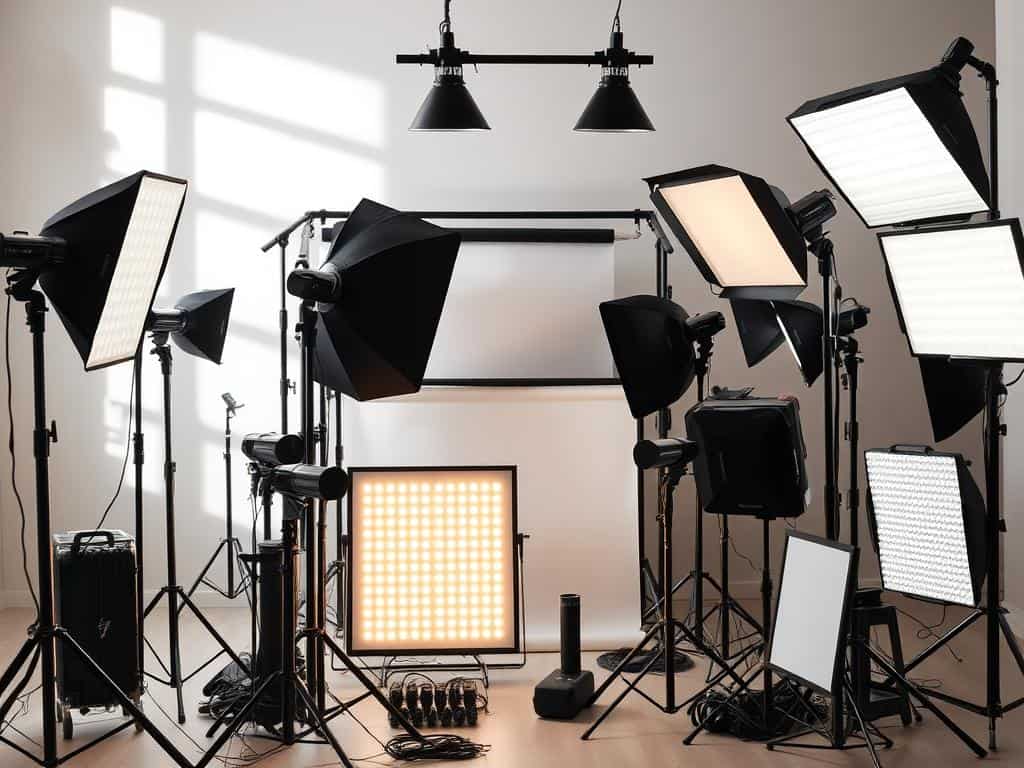

Did you know strobes are the top choice for studio lighting among pros? Knowing about different photography lights is key for amazing photos. This guide will help you understand the various lighting options, whether you’re new or experienced.
We’ll dive into the world of photography lights, from softboxes to ring lights. These tools are essential for your photo’s quality, mood, and look. By the end, you’ll know the difference between continuous lights and strobes. You’ll also learn about flashguns and speedlights, helping you improve your photography.
Key Takeaways
- Strobes dominate the studio lighting market, highlighting their widespread use.
- LED technology in continuous lights has revolutionized photography.
- Flashguns are a budget-friendly alternative to dedicated studio strobes.
- Modifiers like softboxes and umbrellas offer versatility and directionality in lighting.
- Essential lighting setups involve the proper use of key lights, fill lights, and rim lights for balanced scenes.
- Reflectors, grids, and diffusers are vital accessories for achieving precise and creative lighting effects.
- Affordable lighting equipment, such as the Godox TT600 flash, provides high functionality without breaking the bank.
Introduction to Photography Lighting
Photography lighting might seem hard at first, but it’s key to making great photos. Knowing about photography lighting equipment and studio lighting is vital. We’ll cover the main types of lighting used in photography here.
Types of Lighting Equipment
There are many types of photography lighting equipment, each with its own use. You’ll find strobes, continuous lights, and flashguns or speedlights. Learning to use these can really improve your photo lighting skills.
Continuous Lights vs. Strobes
Continuous lights give a steady light, great for videos and photos needing constant light. But, they can get very hot. Strobes, or studio strobe lights, give a quick, strong light. They’re best for fast movements or professional studio shots.
Flashgun/Speedlight
Flashguns, or speedlights, are small, portable, and attach to your camera’s hot shoe. They’re perfect for quick photography, giving you control over light without big gear. Speedlights are used a lot in portraits, events, and macro shots.
Lighting Equipment Guide: Must-Have Accessories
Having the right accessories can make a big difference in your photography. These tools help refine, direct, and enhance your images. They ensure your photos look professional every time.
Modifiers
Light modifiers are key for photographers. They include umbrellas, softboxes, and grids. These tools soften or direct light on your subject.
Umbrellas spread light in different directions, creating a soft light source. Softboxes give even softer light by spreading it out. Grids direct light, controlling its direction and spread.
Tools like the Godox V860III-S support TTL solutions. They also have fast recycling times. This is important for managing light in various situations.
Studio Accessories
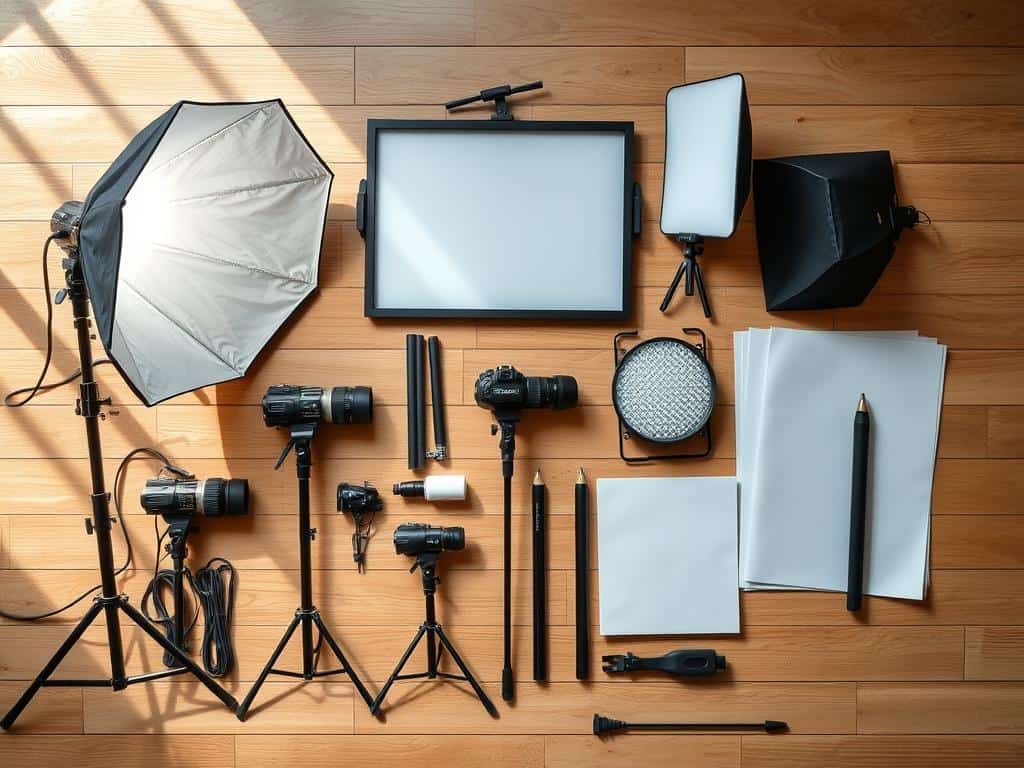
Studio lighting accessories are essential for a good setup. You’ll need light stands, background lights, and C-stands. C-stands are great because they can handle flags, gels, and more.
Adding ropes and timers can save you money. They help control the lighting environment efficiently. Modern tech, like the Profoto B10, can be controlled wirelessly via iPhone. This has changed studio lighting.
Reflectors
Reflectors are vital for adjusting light and filling in shadows. They help balance light distribution. Tools like the NEEWER 5-in-1 Circular Light Reflector are handy.
They offer five different surfaces in one. You can use white for neutral fill, silver for maximum reflection, and gold for warmth. Ring flashes, like the Godox MF-R76, also enhance macro photography. They show the versatility of light modifiers and reflectors.
Conclusion
Mastering photography lights can really improve your work’s quality. The right lighting doesn’t just light up your subject. It changes the whole look of your photos.
Understanding different lighting setups and accessories is key. This way, you can take amazing photos, whether indoors or outdoors.
Getting good at lighting setups is important for all photographers. Knowing about tools like continuous lights, strobes, and speedlights is vital. Each tool helps you control the light’s intensity, direction, and quality.
This skill lets you balance light and shadow well. It adds depth and interest to your photos.
Spending time learning and practicing with lighting tools is worth it. You can adjust colors, use diffusers, and reflectors to improve your photos. These skills are useful for portraits, products, or landscapes.
By mastering these techniques, your photos will stand out. With the right lighting setup, your photography will reach new levels.
