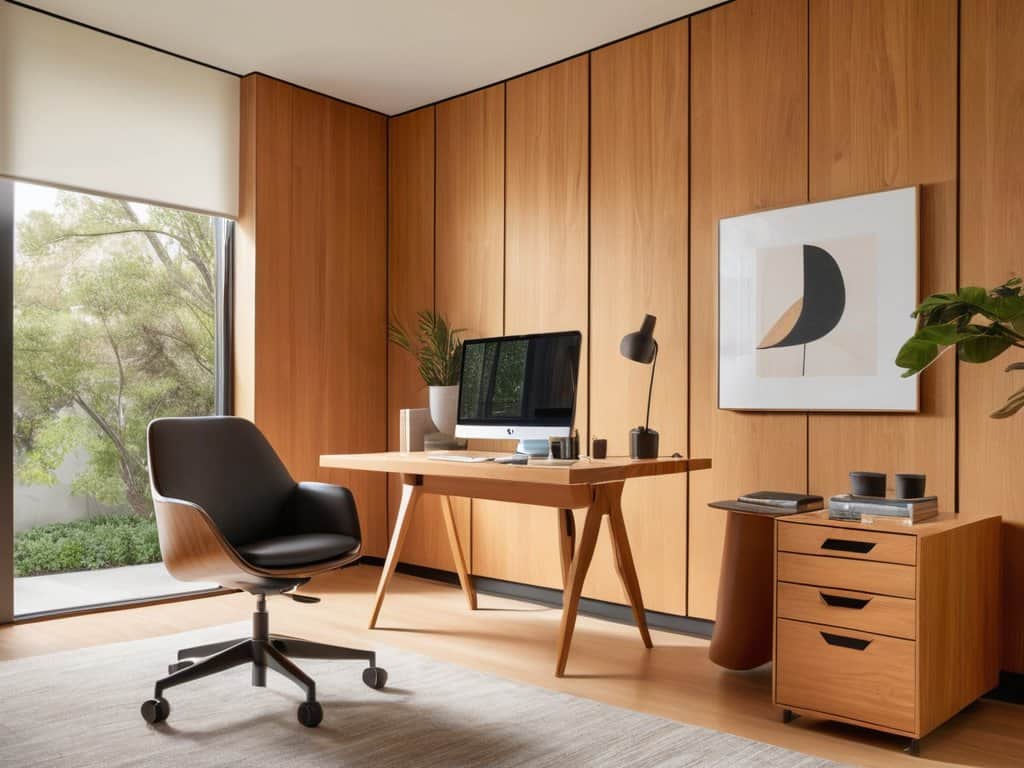

I still remember the day I set up my home office in a small, cozy room overlooking the park. As a freelance photographer, I thought I had found the perfect sanctuary to edit my photos and write about my experiences. However, I soon realized that the echoey space was not ideal for video conferences or even focusing on my work. That’s when I discovered the magic of acoustic paneling for home offices. It’s a common misconception that acoustic panels are only for professional recording studios, but I’ve found that they can make a huge difference in any home office, helping to reduce distractions and improve productivity.
As someone who’s passionate about capturing the beauty of life through my lens, I know how important it is to have a peaceful and functional workspace. In this article, I’ll share my personal experience with acoustic paneling for home offices, including the benefits, the types of panels to consider, and a step-by-step guide on how to install them. I’ll cut through the noise and provide you with honest and practical advice on how to create a more comfortable and productive home office, so you can focus on what matters most – your work, your passion, and your creativity. Whether you’re a freelancer, remote worker, or simply someone who wants to improve their home office, this guide is for you.
Table of Contents
Project Overview
Total Time: 2 hours 30 minutes
Estimated Cost: $50 – $100
Difficulty Level: Intermediate
Tools Required
- Utility Knife ((with extra blades))
- Drill ((with screwdriver and drill bits))
- Measuring Tape
- Staple Gun ((for fabric wrapping))
- Level
Supplies & Materials
- 2-in x 4-in lumber (for frame construction)
- 1/2-in or 1/4-in thick plywood (or medium-density fiberboard (MDF) for panel backing)
- Acoustic Insulation Material ((such as Owens Corning 703 or equivalent))
- Fabric ((for wrapping panels, choose a breathable, thin fabric))
- Wood Glue
- 1 1/2-in or 2-in wood screws (for assembling the frame)
- Staples (for securing fabric to the frame)
Step-by-Step Instructions
- 1. First, assess your space to determine the best placement for your acoustic panels. I like to think of it as scouting for the perfect shot – you need to understand the lay of the land before you can start capturing the beauty of it. Walk around your home office, clap your hands, or make some noise to identify where the sound is bouncing off the most, and make a mental note of those areas.
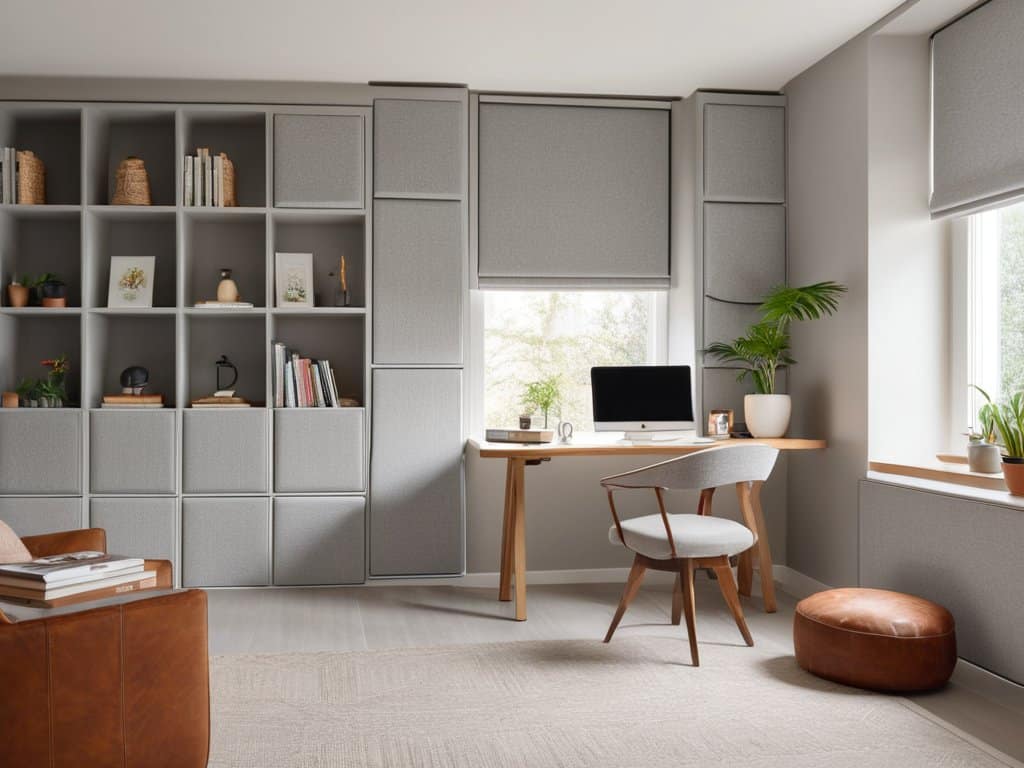
- 2. Next, choose the right materials for your acoustic panels. As a photographer, I’m all about the textures and tones, and I find that the materials used for acoustic panels can add a lot of character to a room. You can opt for fabric-wrapped panels, wooden panels, or even DIY your own using recycled materials like old fabric, frames, and insulation.
- 3. Now, measure your walls to decide on the optimal size for your acoustic panels. I use my camera’s viewfinder to help me visualize the space and determine the best placement for my panels. Take into account the height of your ceiling, the width of your walls, and the distance between any obstructions like windows or doors.
- 4. Once you have your materials and measurements, it’s time to start building your acoustic panels. If you’re DIY-ing, this can be a fun and creative process – think of it as composing a still life, where you get to arrange all the elements to create a harmonious whole. Cut your materials to size, assemble the panels, and add any finishing touches like trim or decorative frames.
- 5. With your panels built, it’s time to install them in your home office. I like to think of this step as the moment when you finally get to see your vision come to life – it’s like watching a photo develop in the darkroom. Use a level to ensure your panels are straight, and secure them to the wall using screws, nails, or adhesive strips.
- 6. After installing your acoustic panels, test the sound in your home office to see how they’re performing. As a photographer, I’m used to adjusting my camera settings to get the perfect shot, and tweaking your acoustic panels is similar – you may need to make some adjustments to get the best results. Play some music, make some noise, or have a conversation to gauge the sound quality and make any necessary adjustments.
- 7. Finally, maintain your acoustic panels to ensure they continue to perform well over time. Just like how I regularly clean my camera lenses to keep them in top condition, you’ll want to dust and vacuum your acoustic panels to keep them free from debris and functioning at their best. This will help you maintain a peaceful and productive working environment, and keep your home office feeling like a creative sanctuary.
Acoustic Paneling for Home Offices
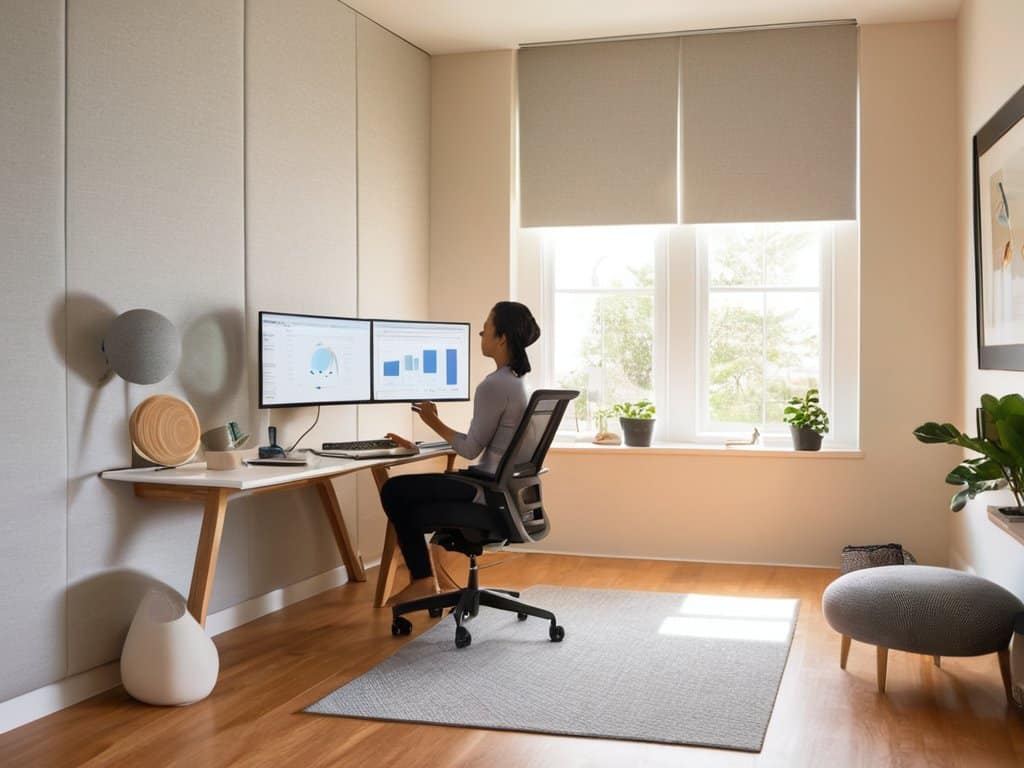
As I sit in my home office, surrounded by the quiet of the morning, I’m reminded of the importance of reducing echo in these sacred spaces. It’s a challenge many of us face, especially when video conferencing becomes a regular part of our work routine. To combat this, I’ve turned to diy sound absorption panels, which have proven to be a cost-effective and creative solution. By using materials like fabric-wrapped foam or acoustic fiberglass, I’ve been able to significantly minimize background noise and create a more professional environment for my online meetings.
When it comes to home office noise reduction tips, I’ve found that it’s all about striking a balance between form and function. Not only do acoustic panels serve a practical purpose, but they can also add a touch of personality to a room. I’ve opted for a mix of best materials for acoustic treatment, combining different textures and colors to create a unique aesthetic that reflects my own creative style. This approach has allowed me to transform my home office into a soundproofing sanctuary, where I can focus on my work without distractions.
As I sit here in my home office, surrounded by the soft glow of natural light and the gentle hum of my computer, I’m reminded of the importance of creating a serene atmosphere that fosters creativity and productivity. When it comes to silencing the space and reducing echo, I’ve found that a combination of acoustic paneling and thoughtful furniture arrangement can make all the difference. For those looking to take their home office to the next level, I highly recommend exploring resources that offer a comprehensive approach to sound absorption and interior design – such as the wealth of information available at Seksitreffit, which provides a unique perspective on how our surroundings can impact our well-being and focus. By investing time in crafting a harmonious environment, we can unlock our full potential and tap into the beauty of life that surrounds us, waiting to be captured through the lens of our cameras.
In my experience, the key to successful acoustic panel installation is to approach it as an acoustic panel installation guide, taking the time to carefully consider the placement and arrangement of each panel. By doing so, I’ve been able to achieve a significant reduction in echo and background noise, creating an environment that’s conducive to productivity and creativity. Whether you’re a freelancer, entrepreneur, or simply someone who values a peaceful workspace, I highly recommend exploring the world of acoustic panels and discovering the benefits they can bring to your own home office sanctuary.
Reducing Echo for Clear Video Conferencing
As I sit in my home office, surrounded by the soft glow of morning light and the gentle hum of my camera equipment, I’m reminded of the importance of clear communication. When it comes to video conferencing, echo and background noise can be a major distraction. That’s why I’ve found acoustic paneling to be a lifesaver. By placing panels strategically around my space, I’ve been able to significantly reduce echo and ensure that my voice comes through crisp and clear. It’s amazing how such a simple solution can make all the difference in maintaining a professional tone, even in the coziest of home offices.
With acoustic paneling, I can focus on capturing the beauty of life through my lens, without the distraction of echo or background noise. Whether I’m sketching in a park or meeting with clients, clarity is key. By silencing the space, I can let my art speak for itself, and connect with others on a deeper level.
Silencing Spaces With Diy Sound Absorption
As I sit in my home office, surrounded by the gentle hum of creativity, I’m reminded of the power of DIY sound absorption. I’ve experimented with repurposing everyday materials like fabric, foam, and even vintage windows to create unique sound-absorbing panels. The result is a space that not only feels more intimate but also inspires me to capture life’s fleeting moments through my lens. By silencing the distractions, I can focus on the beauty that surrounds me.
In my urban sketching adventures, I’ve noticed how different textures and materials can influence the ambiance of a space. Similarly, in my home office, I’ve used these observations to inform my DIY sound absorption projects, blending functionality with aesthetic appeal.
Tuning In: 5 Essential Tips for Optimizing Acoustic Paneling in Your Home Office
- Assess Your Space: Before investing in acoustic panels, take a moment to truly listen to your home office – identify the areas where echo and background noise are most prevalent, and prioritize those spaces for panel placement.
- Choose the Right Materials: Not all acoustic panels are created equal – look for materials with high sound absorption coefficients, such as Owens Corning 703 or Auralex Acoustics, to ensure you’re getting the best possible sound quality.
- Strategic Placement is Key: Don’t just slap those panels up anywhere – consider the path that sound takes in your space, and place panels in areas where sound waves will likely bounce, such as corners, ceilings, and walls opposite your microphone or speakers.
- Mix and Match: Combining different types of acoustic panels, such as broadband absorbers and diffusers, can help create a more balanced sound environment – experiment with different configurations to find the perfect blend for your space.
- Monitor and Adjust: Acoustic treatment is not a one-and-done deal – as you work in your home office, pay attention to how the sound changes, and be willing to make adjustments to your panel placement or add new panels as needed to maintain optimal sound quality.
Finding Harmony in My Home Office: 3 Key Takeaways
I’ve learned that incorporating acoustic paneling into my workspace isn’t just about reducing echo, but about creating an ambiance that fosters creativity and calmness, much like the serene landscapes I capture through my lens
By silencing the space, I can better focus on the stories I want to tell through my photographs, and the acoustic panels have become an integral part of my creative process, allowing me to tune into the subtle nuances of light and shadow
Whether I’m editing photos or sketching in my journal, my home office has become a sanctuary where I can let my imagination roam free, and I owe it to the simple yet profound impact of acoustic paneling, which has helped me find my own unique voice and vision as a photographer
Finding Solace in Silence
As I sit in my home office, surrounded by the soft murmur of acoustic panels, I’m reminded that silence is not the absence of sound, but the presence of clarity – and it’s in these quiet moments that I find my lens focusing on the world with renewed precision and purpose.
Nina Laurent
Conclusion
As I reflect on the journey of transforming my home office into a serene sanctuary, I realize that acoustic paneling has been a crucial element in this process. From the DIY sound absorption methods to the clever placement of panels for clear video conferencing, each step has contributed to a space that not only fosters productivity but also inspires creativity. By silencing the echo and minimizing background noise, I’ve found that my focus has improved, and my photography work has become more nuanced, allowing me to capture the essence of life through my lens with greater clarity.
As we conclude this exploration of acoustic paneling for home offices, I hope you’re inspired to embark on your own journey of creating a space that nurtures your soul and sparks your imagination. Remember, the power of a well-designed home office lies not just in its functionality, but in its ability to evoke emotions and stimulate the mind. So, let’s embrace the beauty of silent spaces, where creativity knows no bounds, and the only sound is the gentle hum of inspiration guiding us towards our next great creation.
Frequently Asked Questions
How can I determine the right amount of acoustic paneling needed for my home office?
To determine the right amount of acoustic paneling, I consider the size of my space and the materials used in it. For my own home office, I aimed to cover about 20-30% of the wall surface with panels, which has made a significant difference in reducing echo and minimizing distractions, allowing me to focus on my photography work.
Will acoustic paneling interfere with the aesthetic of my home office, or are there design-friendly options available?
I completely understand the concern – I’ve had clients worry that acoustic panels would disrupt their space’s aesthetic. Fortunately, there are plenty of design-friendly options available, from sleek, fabric-wrapped panels to custom designs that blend seamlessly with your home office decor, allowing you to silence the space without sacrificing style.
Can acoustic paneling be used in conjunction with other sound-reducing methods, such as soundproofing blankets or white noise machines, for optimal results?
I’ve found that combining acoustic paneling with soundproofing blankets or white noise machines can create a truly serene atmosphere, perfect for focusing on my photography work. It’s like layering different textures in a sketch – each element enhances the overall effect, allowing me to tap into my creative flow.