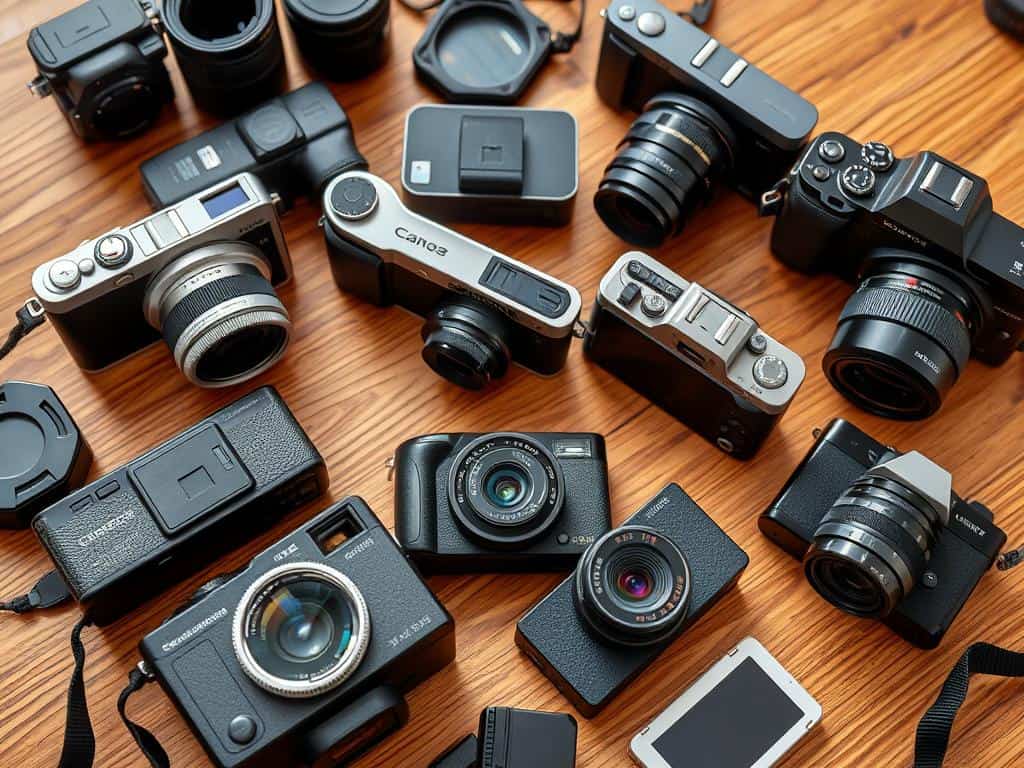

Did you know the Fujifilm X100 VI has a 40.2 megapixel sensor? This is way more than most smartphones. These small cameras have grown from simple point-and-shoots to powerful tools. They now compete with DSLRs and mirrorless cameras.
Compact cameras are now key for travel photography. They’re small and light, making them easy to carry. In this guide, I’ll show you how to pick the best one for your photos. I’ll also share my top picks to improve your photography.
Key Takeaways
- Compact cameras have evolved, featuring advanced technology like 5-axis image stabilization.
- They are ideal for travel photography due to their lightweight and compact design.
- Providing superior image quality, many compact cameras now boast RAW capture capabilities.
- Understanding sensor size and megapixel count is key when choosing a compact camera.
- Modern models, like the Fujifilm X100 VI, offer impressive video recording options.
- Finding the right balance between portability and performance is key in compact cameras.
The Evolution of Compact Cameras
Compact cameras have changed a lot over the years. They used to be slow and not very good at taking pictures. Now, they are much better thanks to new technology.
Today’s cameras have advanced sensors and processing. This means they can take pictures faster and with better quality. Photographers can now get great shots without carrying heavy equipment.
From Point-and-Shoot to Powerful Devices
Old point-and-shoot cameras were easy to use but not very good. Now, compact cameras have features that were once only for bigger cameras. They can focus fast, even in different light conditions.
This change means compact cameras can match the quality of bigger cameras. Cameras like the Ricoh GR II and Fujifilm X100F show how far they’ve come. They are small but powerful.
Why Compact Cameras are Ideal for Travel Photography
Compact cameras are great for travelers because they are light and easy to carry. They fit in my pocket, so I can take pictures anytime. They also work well in low light, which is perfect for travel.
These cameras are fast and easy to use. They have touchscreens and can connect wirelessly. For travel photography, a good compact camera makes a big difference.
Choosing the Right Compact Camera
When picking out compact cameras, knowing what features you need is key. The right mix of features can really improve your experience. Sensor size is very important for image quality, helping with details and low light.
Key Features to Look For
Looking for the perfect compact camera, I focus on a few key things. Lens quality and autofocus speed are must-haves for quick and sharp photos. Touchscreen interfaces and wireless connectivity make photography more fun. Also, the camera’s build and extra features are important for a great photography journey.
Understanding Sensor Size and Image Quality
Sensor size affects image quality a lot. For compact cameras, a sensor of at least 1/1.7” is good for A3 prints at low ISO. Having at least 12 Megapixels helps keep details sharp in moving scenes. Bigger sensors also handle noise better, making them better for high-ISO shots in the dark.
The Canon G11 is a great example, doing well at high ISOs. This shows how important sensor tech is for top-notch photos.
Portability vs. Performance: Finding the Balance
Finding a balance between portability and performance is tough with compact cameras. I like cameras that are light for travel but don’t sacrifice image quality. Spending over $300 often means better quality than smartphones.
Advanced compact cameras offer a good balance. They have big sensors and high pixel counts, appealing to both casual and serious photographers.
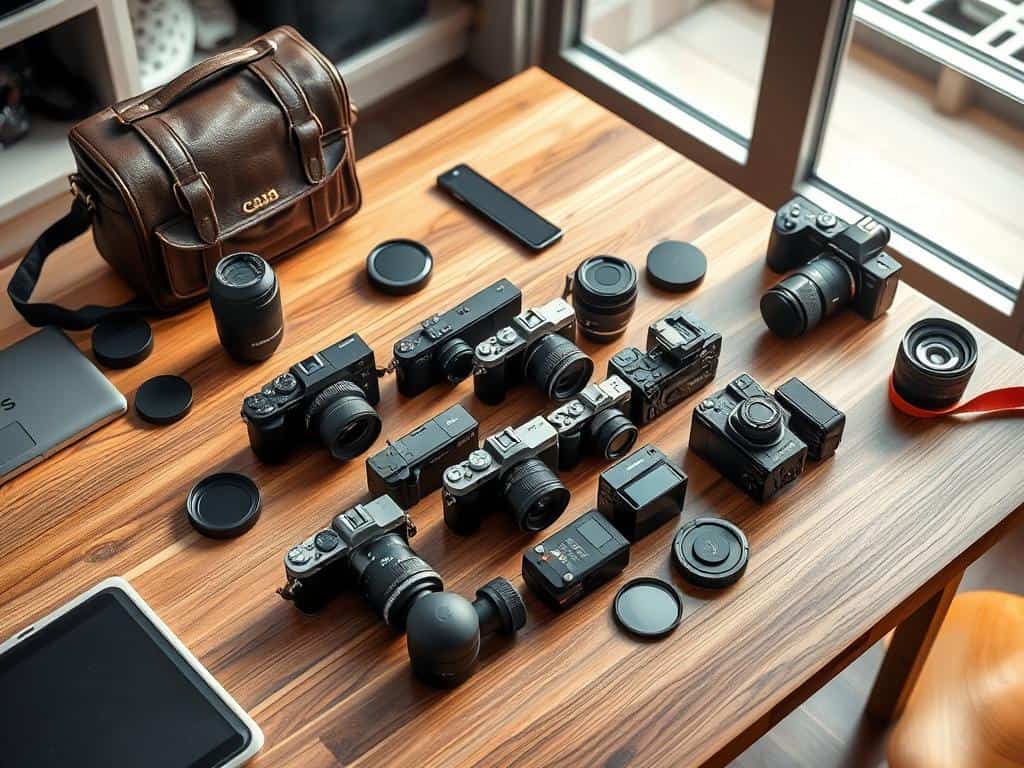
Compact Cameras Guide
In this guide, I’ll share my top camera picks for different photography needs. I’ve looked at over 110 compact cameras. It’s important to know which ones are best for everything from casual snaps to serious photos.
Top Picks for Different Photography Needs
The Fujifilm X100VI is great for travelers. It scores well in travel and landscape photography, with a 7.8 rating. It also does well in raw photo performance, with a 7.9 rating. It’s perfect for those who want quality in a small package.
The Ricoh GR III is ideal for street photography. It scores an 8.4 in landscape photography and an 8.8 in raw photo performance. It’s not the best for vlogging, but it captures urban scenes well.
The Sony RX100 VII is good for casual shooting. It scores a 7.3 in travel photography. It’s also decent for sport and wildlife, with a 7.2 rating. Its vlogging rating of 7.3 makes it versatile for documenting adventures.
Comparing Mirrorless and Traditional Compact Models
Understanding the difference between mirrorless and traditional compact cameras is key. Mirrorless cameras often have better sensors, matching DSLRs in quality. This makes them appealing to both beginners and experts, showing a trend towards mirrorless for better functionality.
On the other hand, traditional compact models are great for those who value portability. While they’re good for basic shooting, serious photographers might want more manual control. This is often found in advanced compact models or mirrorless systems.
Conclusion
Compact cameras have come a long way. They’ve evolved from simple point-and-shoots to powerful tools for photography. Whether I’m taking stunning photos of landscapes or capturing special moments, the right camera makes a big difference. This guide has shown me the many options in the compact camera market.
Cameras like the Fujifilm X100VI and the Sony Cyber-shot RX100 VII stand out. They offer amazing features like 6.2K video and fast shooting. These cameras are great for travel because they’re small but pack a big punch.
Exploring compact cameras has shown me their many benefits. They offer better image quality and cool features like zoom and stabilization. With this knowledge, I’m more confident in picking the perfect camera for any photo shoot.
